Guy's Blog

Guy frequently keeps this blog updated with thoughts, challenges, interviews and more!

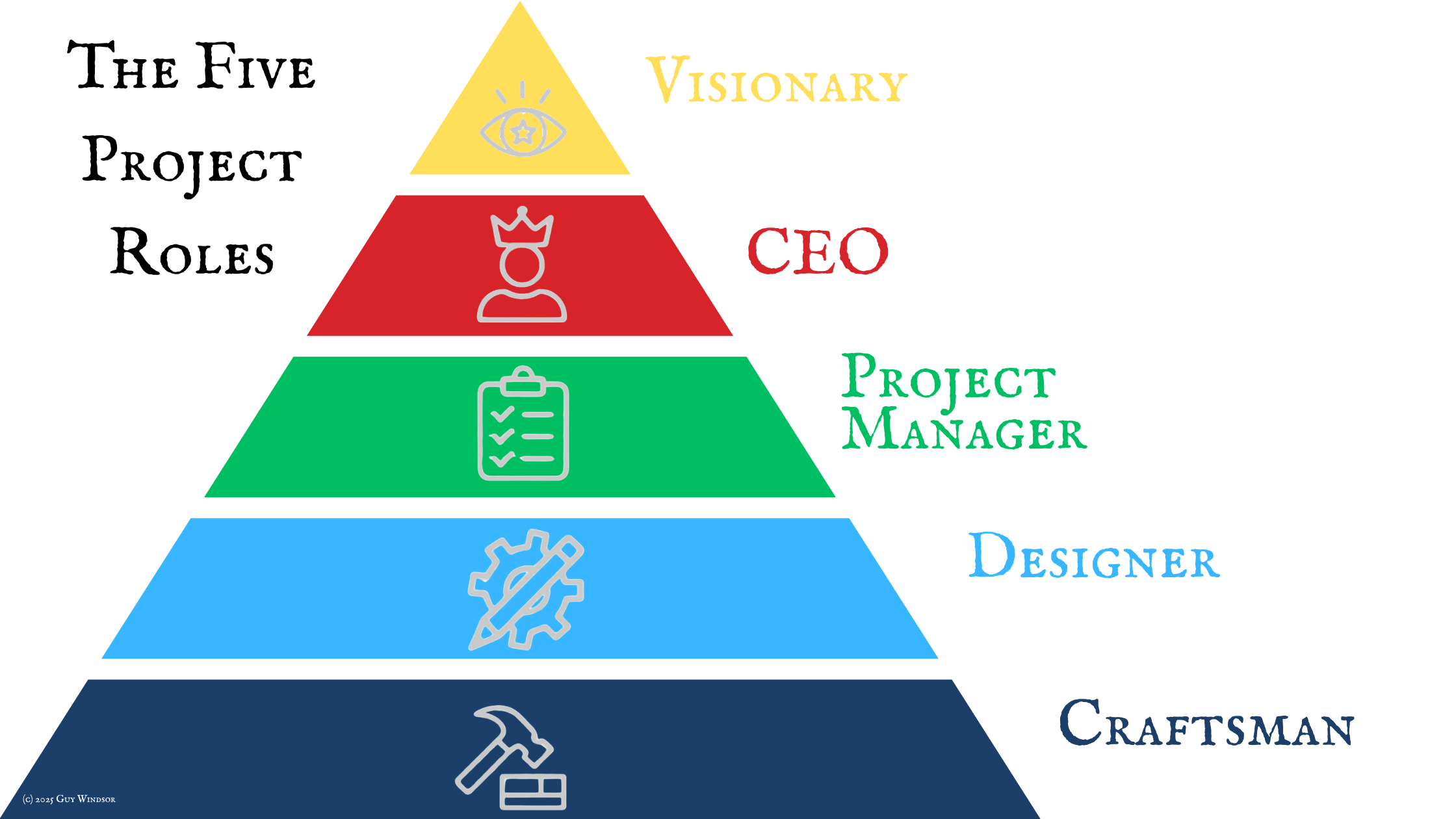
The 5 project roles every creator needs: Visionary, CEO, Project Manager, Designer, Craftsman

Every project, no matter its size, needs five people. Most of us have only one: ourselves.

I was chatting with a friend the other day, and he mentioned a framework that his dad, a very successful entrepreneur, came up with. According to him, the five people every company needs are: The Founder, The CEO, The Project Manager, The Engineer, and the Builder.

For some reason this stuck with me, to the extent that I’ve been making weird pentagonal drawings on the back of random printouts:A geometrical sketch or a pentagon and five pointed star re the five project roles
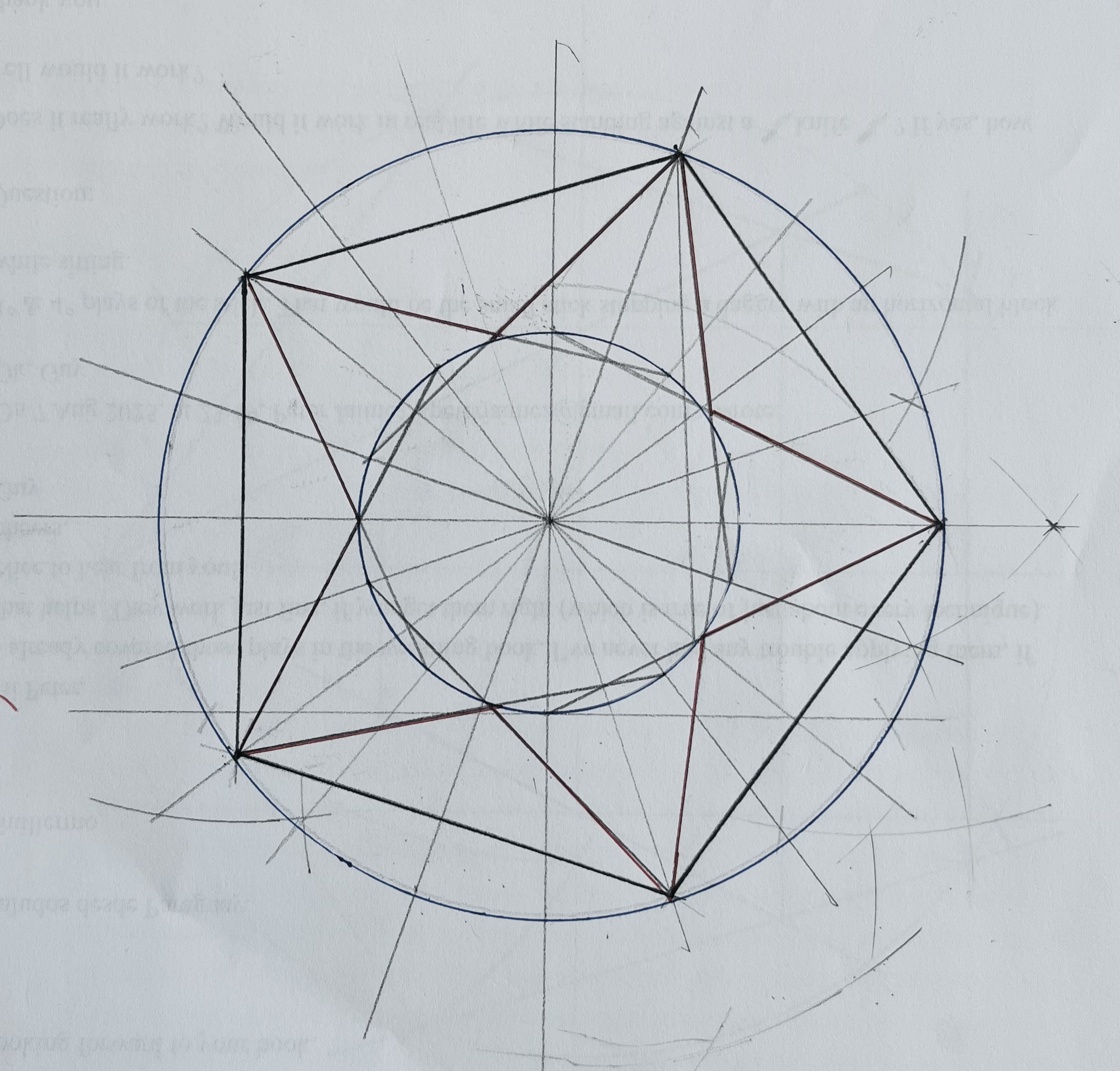
It's always a sign that something is brewing when I start spontaneously doing geometry. For weeks I couldn't get this idea out of my head. It explains many of the challenges I've faced running my business, and has highlighted some areas I need to work on.

The Five Project Roles

The catch? In my world, and probably yours, all five roles are played by the same person.  But they are very, very different roles requiring unrelated attitudes, aptitudes, and skills.

The aptitudes are:

  1. Vision,
  2. Execution,
  3. Management,
  4. Design, and
  5. Craftsmanship.

Very few people possess all five personalities and skillsets. I certainly don’t. But using this framework I can see why and how I’ve ended up outsourcing the things I’m not good at, and also confirmed what I absolutely must not outsource.

Case Study: The project roles you need when writing your book

Let’s take a concrete example that many folk can resonate with: writing, publishing, and marketing a book. These are separate processes, so while the visionary and CEO are hopefully leading the way, and the project manager is coordinating the three processes, it makes sense to treat them separately, as the design and craft teams are different.

When we think of “writing a book”, we tend to focus on the craftsman: the writer actually putting one word after another, like a bricklayer building a wall. But what colour bricks, in what pattern? Where should the wall be, and how high should it go? That’s up to the designer. In this case, the overall structure and content of the book. What does this book need to contain, in what order, to what depth of detail?

Most writers act as both Designer, shaping the structure, and Craftsman, laying down the words, but a developmental editor can help with design while a copy-editor polishes the craft. So you will only need to wear your writer hat to get this part done. And most writers I know identify only as writers. This is the hat they want to wear. But here's how it should go:

The Visionary has the idea. I want to create this thing. A single book, perhaps. An entire business, for another perhaps.

The CEO figures out how the vision can be made manifest in the real word. What project management, design, and craftsmanship will we need? It’s in a CEO’s nature to veer away from the vision towards the practical. So the visionary must keep an eye on things and make sure their beautiful idea doesn’t become watered down for business or other practical reasons.

Taking a step back, who decides what book, when? How does this specific project fit into the overall strategy of the business that is being an independent author? Many writers, including me, just write whatever they want, when they want, according to no plan of any kind. But most of the really successful ones have a strategy in place. This series in that genre, spread out over this timeframe, for this business goal. That’s CEO territory. My CEO quit a long time ago in frustration and disgust. But once the decision is made, the order comes down: this book, now.

The project manager steps into office. Ok, I’m going to need the following: a writer, a developmental editor, a copy editor, a layout designer, a photographer, an admin assistant to handle the publishing platform accounts, oh, and a marketing team when we’re ready.

Then the designer (or developmental editor) looks at the brief and decides what the overall structure of the book should be, and why. Some writers just start writing and see what structure emerges (‘discovery writers’); others plan things out in detail (‘outliners’). So the designer and the writer must get along pretty well, and pass the job back and forth as necessary. Unlike creating an engine or a building, you really don’t need detailed plans in place before starting work on a book if that’s not the way your brain works.

I’m a woodworker, and when I make a piece of furniture I usually start with the overall dimensions so it will fit where it’s going to go, and that’s it. No detailed drawings, no plans, no measurement. I’m a bit more structured when it comes to books (I usually sketch out the table of contents first), but I’m nothing like Saul Bellow, who famously planned his (Nobel Prize-winning) novels “down to the last flicker of an eyebrow”.

The draft emerges and goes through the necessary rounds of editing until it satisfies the project manager. Not the writer. Writers generally don’t like people messing with their words. But they are not in charge of this bit. The fight is usually between the craftsman wanting to tweak more, and the project manager who can see that the project meets spec and so should be pushed out the door.

Then it goes to layout, and the designer, writer, layout person, and editors fiddle about with the laid-out book until again the project manager signs off, and out it goes to the publishing team.

Publishing your book

Creating the book itself, the actual print files, is down to the graphic designer. Again, some writers can do this themselves, but most really can’t, or shouldn’t. Graphic design is its own thing. This, I would say, is still craftsmanship, but in a field that most writers have no knowledge of. For simple text-only books there are tools like Vellum which put simple book design within reach of the graphically unskilled, but for more complex projects (like my From Medieval Manuscript to Modern Practice series, or my workbooks) you absolutely need a professional.

Then who organises the planning, writing, editing, and layout, and gets the finished files uploaded to the right places, so the book is actually published? That’s project management, pure and simple. A lot of Indie authors do this for themselves too, and many stumble at this point. Because it’s hard, not least because emailing an editor to say the book is ready to be edited, or sending the edited files to the layout person, feels like handing your baby over at the daycare centre.

Then it goes to layout, and the designer, writer, layout person, and editors fiddle about with the laid-out book until again the project manager signs off. The writer, layout person, and editors, are all craftspeople, with their own areas of expertise, which often expand into design territory.

Then it goes to the admin assistant for publishing. The careful uploading of all the right files to all the right places, with metadata and all the rest, is a craft.

Marketing your book

At some point in the publication process the marketing team gets to work. Usually some time before the book is actually finished, sometimes before it’s actually started. Tragically often, after it’s already published.

The marketing team report to the project manager. What kind of campaigns should we run? Paid ads or no? Content marketing? If so what kind? The marketing approach should be engineered to fit with the vision, the overall strategy, and the project management of the book itself.

Most writers have a severely under-developed and under-staffed marketing team. The writer says “I’ll mention it on my socials” or “I’ll let my email list know” and that’s that. The question really is how does the marketing strategy fit with the overall strategic vision? If my strategic vision is “I want to write my books and don’t care how they sell”, then no marketing plan is required. If my strategic vision is “these books should pay the mortgage”, then a marketing team (usually still just another facet of the single person doing all these roles) needs to make that happen.

A common problem with marketing teams is that they mess up the vision, just like CEOs. It may be part of your vision that your work is at the luxury end of the market (super-fancy $100+ special editions), or that it’s as accessible as possible (hello free ebooks), or some combination of both. But the vision will determine the price-point, which is the starting point for the marketing. It’s easier to persuade people to buy a $10 book than a $100 book, but pricing is related to value, so you need to have a clear idea how much value your books will deliver.

My books are generally much more expensive than novels (my paperbacks go for about $30), because I’m not selling a few hours of entertainment to a broad range of people, I’m selling months or years of utility to a narrow range of highly interested people. That comes from the vision, which determines pricing. I also have premium-end books (in the $60 full-colour hardback range), and ebooks priced to be accessible for anyone who really wants the information ($10). I make about half my income from book sales: they literally feed my children. That’s both a product of the pricing strategy, and one of the reasons for it. But my marketing really needs work.

If you're looking for help writing, publishing, or marketing a book, my marketing team would lynch me if I didn't mention From Your Head to Their Hands.

How much time does each project role get?

  • 80% of the work is done by the craftsman. Typing out the right words in the right order, deciding what images are needed and where they’ll go, producing the file that goes to the editor and then to layout.
  • 10% is done by the designer. Organising the material, making sure the whole thing will hang together.
  • 7% is project management, getting the craftsman, designer, editor, and graphic designer talking to each other.
  • 2.9% is the CEO making sure the project manager is on the right track. Once the team is assembled, the CEO is really only there to keep things on track with a gentle hand on the tiller.
  • 0.1% or less is the actual spark of vision. The visionary can literally be done and dusted in a second. The idea strikes, and that’s that.

Let’s put this in a Fiorean framework, just for fun (Fiore was a 14th century master of knightly combat). The Visionary is Ardimento, boldness. It takes courage to see through what is to what might be. The CEO is Avvisamento, foresight, the strategist. The Project Manager is Presteza, speed, making sure everything actually gets done on time. The Designer is Forteza, strength, which comes from structuring everything correctly. So who is the Craftsman? Every single master, remedy master, counter-remedy master, and scholar in the treatise. They are actually putting the plan in action in the real world.

The most obvious thing I’ve noticed in my own work using this framework is that my craftsman, designer, and project manager are getting lots done. I produced six books and two online courses in 2024. This year so far I've produced four new online courses (Vadi Longsword, Vadi Dagger, Body Mechanics, and Introduction to Historical Martial Arts), and one or two more books are expected out by the end of this year. I think that counts as “lots”.

But my CEO is usually on holiday, and the visionary gets almost no time at all. Which is ironic given how this all started, with an actual vision on a Scottish mountain a quarter of a century ago.

Wearing All Five Hats as a Solo Creator

This framework matters because it is very useful for making decisions. Which of the five project roles should be to the fore, which hat should I be wearing, when I decide a book is ready to publish? Really, it should go through all five.

  1. Does this book come from an authentic vision?
  2. Does this book meet our strategy goals?
  3. Is this book technically ready to publish?
  4. Is this book well structured, so it will do its job?
  5. Is this book well made, in terms of writing, editing, and graphic design?

My current work in progress is From Medieval Manuscript to Modern Practice: the Dagger Techniques of Fiore dei Liberi. It’s with the editor now, and available to pre-order here. See? The marketing team is on the case even while the publishing team is in play. The vision is clear: this is 100% on-mission, making my interpretation of Fiore dei Liberi’s art of arms more available and completely transparent (the book includes every single dagger play in the treatise, with the image from the manuscript, my transcription of the text, my translation, my interpretation with academic justification, and a video of how I do the play in practice).

The CEO thinks it aligns with the strategy.

The project manager is keeping an eye on the editor and has the layout professional ready to go (and in communication with the editor directly).

The designer is happy with the structure and overall content.

The craftsman was sure he was done tinkering and needed a second opinion before further improvements could be made, so agreed to send it to the editor.

Phew.

I’m also working on a new facsimile project, similar to my Flower of Battle. It will have the straight, unaltered, facsimile of Philippo Vadi’s De Arte Gladiatoria Dimicandi, and a second facsimile with my translation superimposed, and a link on each page to a video of my interpretation of the play. It’s a lot of work, but most of it was already done for other projects. The translation comes from The Art of Sword Fighting in Earnest (with minor edits that will also result in an update to the book), the video clips come from my Vadi Longsword and Dagger courses.

The project manager was perfectly happy just using the videos as they are; all of the dagger plays are edited page by page, but the longsword plays have a video each (they are more complex to set up and explain). For this project, I really ought to create a new set of title cards, and re-edit the videos so that there’s one video per illustrated manuscript page. That’s about 56 videos.

The project manager was horrified by how much time that would take, for what is basically a cosmetic improvement.

The craftsman told him to bugger off.

Which role is not getting their fair share of my attention?

As we've seen, from the project manager on down everyone is working pretty hard. But the CEO hasn't got a lot of my attention lately. The last formal CEO thing I did was attend a business seminar with Joanna Penn and Orna Ross on The Creator Economy in 2022. And when was the last time I sat on a mountain?

To give the visionary a fighting chance (and maybe to get the CEO to return to work) I’m taking a week off from all screens and inbound traffic. No email, no socialz, no phone. Which means no actual making stuff unless it’s woodwork or bookbinding. No writing unless it’s pen on paper. No distractions. Give the inner voice a chance to be properly heard. We’ll see what comes of that. My feeling is that anyone who knows me well enough to need to contact me urgently will also be able to contact my wife and/or kids, so can find me that way. Everything else can wait a week without the sky falling.

I’ve done similar retreats before, but this one will be a bit different, as I’ll be home, and not on holiday in any way. It’s work, just of a different kind. Meditation, exercise, writing, reading, thinking. Not typing, editing, or responding to external requests for my time. That’ll run from Wednesday October 1st to Wednesday 8th because I have a regular zoom call with my mum on Wednesday mornings where we solve cryptic crosswords together, and I’m not cancelling that. But it’s all screens off the moment we hang up, until it’s time to get cracking again the following week.

The visionary’s whisper can’t be heard over the noise of constant production.

So whether you’re writing a book, starting a historical martial arts club, or building a shed, ask yourself:

  1. Can I hear the Visionary?
  2. Is the CEO guiding strategy?
  3. Is the Project Manager keeping things on track?
  4. Is the Designer building a solid plan?
  5. Is the Craftsman executing their art with skill?
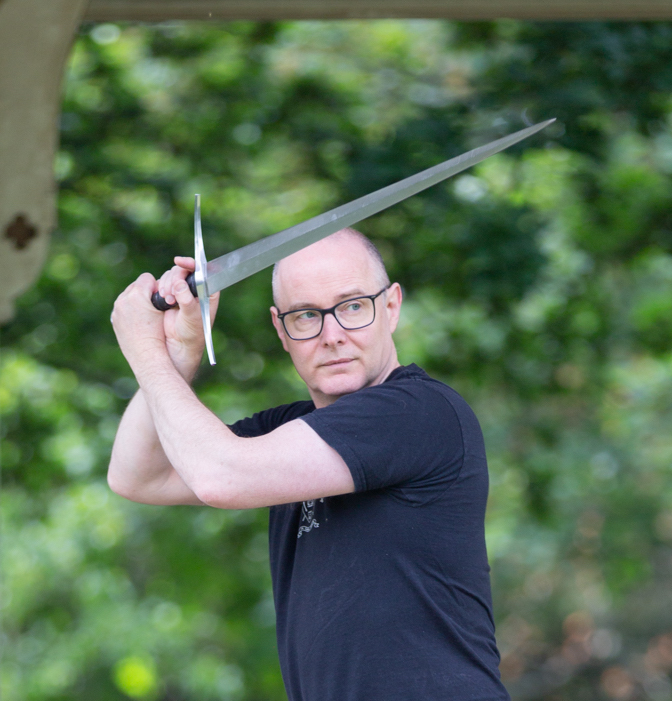
Guy holding a sharp longsword with decent mechanics

I'm teaching a seminar here in Suffolk for my friends at Suffolk HEMA on Saturday October 18th. If you'd like to learn to move better, and to analyse any guard position or movement from a structural perspective, you should come!

Move Like Fiore

Improve your structure, flow, and control in Fiore’s art of arms
Good movement is the foundation of great fencing. It keeps you safe from injury, helps you control your level of force, protects your training partners, and lets you fight harder and longer without fatigue.
In this full-day seminar, you’ll develop practical skills to make your fencing smoother, stronger, and more efficient. Together we will cover:
1. Analysing and improving the structural qualities of Fiore’s guard positions
2. Refining transitions between the guards
3. Different ways to hold the sword for specific purposes
4. Centres of rotation and how they affect different plays
5. How to strike with speed, power, and control
6. Applying these mechanics to wrestling, dagger, and longsword plays

Event Details

When: Saturday, October 18 · 11am–5pm (with a lunch break)
Where: The Coddenham Centre, Mary Day Cl, Coddenham, Ipswich IP6 9PS
Cost: £50
Bring: Longsword, fencing mask, dagger (if you have one), water, lunch. Freeplay kit is optional, but bring it if you like.
Sign up with this paypal link.
I would highly recommend having a look at my free Fundamentals: Body Mechanics course to prepare (or in case you can't make it over here from New Zealand). It will familiarise you with my approach, and the more people who know the basics of this method, the more stuff we'll be able to cover on the day.

Alison Balsom is retiring this week, quitting after 25 years at the very top of the classical music world. She is probably the most famous classical trumpeter of her generation, and certainly ranks with the greats: André, Marsalis, Hardenberger, Harjanne (go Finland!). She’s 46.

I have several of her 17 albums, and she is an astonishing player. I've played the trumpet enough to really get how fabulously skilled she is.

So what? You may very well ask. Here’s the thing that really caught my attention. When asked by Classical Music magazine what she was going to do next, she said:

“I’m not going to be a world-famous anything else I don't think, but I really want to paint. I really want to make things, I really want to draw and learn another instrument… I have these recurring dreams about playing the viola and the cello and the violin… also I just have always wanted to design things. I just want to sit quietly and design things. That's what I was maybe supposed to be, a designer.”

She’s world class, and she’s quitting at the very top of her game. I have to respect that, and also, isn’t it an extraordinary thing that she thinks that maybe she should have done something else? She also said:

“I’ve followed my particular path, very honestly and with authenticity and I feel that I've come to the end of that path.”

Knowing when to quit is one of the most important skills in life. Dropping something even though you’re good at it (and she is the best), even when you’re successful, just because your heart isn’t in it any more.

Go Alison.

The night after I found this out, I had a weird dream in which I was at a concert where she was playing, and she was having all sorts of crises of confidence. I told her two things (just to be clear there is absolutely zero chance she would ever come to me for advice. This was my subconscious telling me something).

1. Your true fans care about your wellbeing more than about any one performance.

2. Play the music of your heart.

I’m not in her league in any field, but I am pretty well established in my profession. And yet every now and then (not less than once a month) I wonder whether I’m still doing what I’m supposed to be doing (whatever that means). Am I following my particular path with authenticity?

The one thing that reliably makes me feel like I’m in the right place doing the right thing is teaching in person. Having a classful of students growing in the art with a little help from me. Everything else, the writing, courses, all the extra stuff, is a maybe.

I’m not sure where I’m going with this, but it feels like a clear reminder that above all else I should be playing the music of my heart, whatever that is.

Maybe you should too?

On Monday this week I sent the final draft of From Medieval Manuscript to Modern Practice: the Dagger Techniques of Fiore dei Liberi off to the editor. Hurrah! There's a lot of admin work to do from here, checking edits, sending to layout, making sure all the links work etc., but let's put it this way: if I became incapacitated, my highly competent assistant could get the book finished and into your hands no problem. Some authors call this the “truck draft”, as in, if I were hit by a truck, the book would still come out.

Which means that it's ready to preorder, in ebook, paperback, or hardback. I expect the book back from the editor this month, and back from layout in October, so if all goes well it should ship in mid-November.

You can find it here.

So what's the book about?

It's my complete interpretation of Fiore dei Liberi's dagger plays. Every single one of the 76 plays we see in the Getty manuscript is there, with the illustration from the manuscript, my transcription, my translation, my explanation of how it works, and a link to a video clip showing my interpretation in action.

There is also a comprehensive introduction about Fiore himself, the treatise, and the four known manuscript versions of his work, and various asides and digressions about elements of practice. Going by word count, the actual dagger plays and interpretation text are about 60% of the book, so there's a lot of extra material.

Sound like fun? Preorder here.

Here's an example of what you'll get (it will look better when the layout is done by a professional: this is just me pasting stuff into an email program).

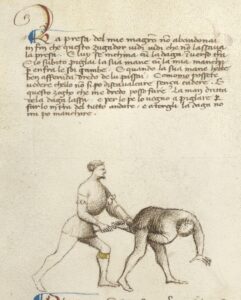
The Seventh and Eighth Plays of the Ninth Master

F18v

Fiore's 7th play of the 9th master, dagger between the legs, interpreted by Guy Windsor
La presa del mie magistro non abandonai in fin che questo zugador vidi vidi che non lassava la presa. E luy se inchina cum la daga in verso terra. E io subito piglai la sua mane cum la mia mancha per enfra le soi gambe. E quando la sua mane hebbe ben afferada, dredo de lu passai. Comomo possete vedere chello non si po discavalcare senza cadere. E questo zogho che me dredo posso fare. La man dritta dela daga lassa, e per lo pe lo vegno a piglare per farlo in terra del tutto andare, e a torgli la daga no mi po manchare.

I will not abandon the grip of my master so that this player saw that he could not leave the grip. And he leant down with the dagger towards the ground. And I immediately will grip his hand with my left hand between his legs. And when his hand has been well secured, I will pass behind him. As you can see, he cannot dismount [from my grip] without falling. And this play that is after me I can do. The right hand leaves the dagger, and I will come to grab him by the foot to put him completely on the ground, and I will not forget to take his dagger from him.

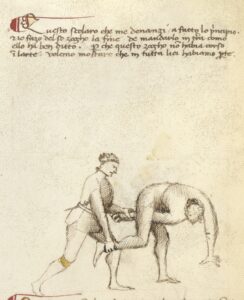
Fiore's 8th play of the 9th master, with the leg lift, interpreted by Guy Windsor

Questo scolaro che me denanzi a fatto lo principio, et io fazo del so zogho la fine de mandarlo in terra como ello ha ben ditto. Per che questo zogho non habia corso in larte, volemo mostrare che in tutta liei habiamo parte.

This scholar that is before me has done the start, and I do the end of the play, by sending him to the ground as he has well said. Because this play is not common in the art, we want to show that we have a part in all of it.

This technique is fascinating, and lots of fun to practice if you’re careful. It works best if the player is pulling back on contact, or you can create some space for it by a sneaky backfist to the groin with your left hand. Having made the cover, you slam their wrist into their groin, then let go with your left hand (unless you already did to do the backfist) and reach around their leg to grab their wrist again from behind. This is quite easy because you are just finding your own right hand. Then let go with your right hand and bring that around too. You’re now holding their wrist between their legs from behind. If you just yank upwards they will fall on their face, or you can grab their ankle and yank that up for extra vim. Fiore recommends doing the disarm too, which we see in the first image.

You can see this play here: guywindsor.net/dagger064

I'm hoping it's really obvious to you whether this is your kind of thing or not. If not, no worries, there's plenty of other material for you. But if it is your thing, you can preorder here. And if you think your friends will like it, do share.

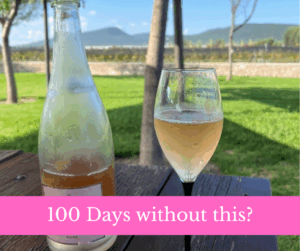
wine glass and bottle, scenery background, no alcohol 100 days

As I posted on Sword People last week, I'm taking 100 days off alcohol. Why would I do that?

The DEXA Scan: an uncomfortable truth

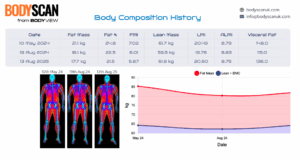
I was in London a couple of weeks ago for a family reunion, and took the opportunity to wiggle along for another DEXA scan (at BodyScan UK). My last was a year ago. On the positive side, I’ve put on about 2.4kg of ‘lean mass’ (the scan can identify fat, bone, and ‘lean mass’, which is everything that isn't fat or bone), mostly in the upper torso. And my overall fat percentage has come down from 24.8% in May 2024, to 21.5% now. Great.

But my genetics put the remaining fat mostly in my viscera, the absolutely worst place to have it. I had 148

cm² (which is a weird way to measure a volume, but hey) in May '24, down to 115cm² in August '24, but as the muscle piled on (yay!) it brought some fat with it (as it almost always does), and it all went round my organs, so it's back up to 136cm². Boo.

Dexa scan body composition history for Guy Windsor

Subcutaneous fat isn’t such a big health problem, in reasonable amounts. But visceral fat is bad for inflammation, blood lipids, diabetes risk, the works. And it seems that’s where I store it.

I've uploaded the results as a pdf here, in case you're interested in the actual numbers: Guy_Windsor_DEXA_2025-08-13-report


So why cut alcohol specifically?

I’m not a big believer in calorie restriction as the main driver of fat loss, because while the laws of thermodynamics are absolute, your body is insanely complicated, and has all sorts of ways of adjusting your metabolism to lose or put on weight depending on various triggers. What you eat, and when, is as important as how much. And don't get me started on gut biome. I first really understood this when I accidentally lost 10kg in three weeks. But if there are a bunch of unnecessary calories coming in from somewhere, that's the obvious place to start.

For me the biggest source by far of “empty” calories is alcohol. My natural state is to have a glass of wine or two while cooking, and another glass or three while having dinner, and maybe a dram afterwards, pretty much every day. I normally get through about 7 bottles of wine a week minimum, without hangovers or other obvious ill effects. I think my soul is mostly Italian!

When I went alcohol-free for a month this Spring (thanks to a bad cholesterol test), I lost about 2kg and 4cm around my waist. It messed with other things though- I didn’t get a word written in all that time, other than newsletters. And I didn’t feel any particular energy benefits. Though I ought to have been sleeping better, I wasn’t waking up full of beans and ready to face the day any more so than usual.

But, several credible sources (the folk I listen to most on these subjects are Dr. Peter Attia, and Dr. Rhonda Patrick) suggest that the real benefits to cutting booze come around the three month mark. Kevin at BodyScan said the same thing. So I’ve decided to take 100 days off alcohol. I started on August 19th. Day 100 is November 26th, four days before my birthday.

Why not just cut back?

It's very hard to measure a small amount every now and then. Sure, I bet I could get most of the benefits if I just had one glass of wine on a Friday night. I've previously established with sleep monitors that a glass of wine with dinner has no measurable effect on my sleep (I eat early). But then what happens to the rest of the bottle? How much wine is that really? What if I swapped out the wine for a dram of Lagavulin? It's just much easier to measure “no booze” than figure out “some booze”. And from a self-control issue, it takes very little effort (for me) to have decided to not drink at all, than to stop at one. The hard part is making the decision to stop. Now that's done, thanks to bastard DEXA, it's really no big deal (for me).

I know that other people have much more serious issues with alcoholism or other addictions, so please don't read this as minimising their struggles. And I can think of several life events that could occur that would lead to me immediately abandoning this experiment in favour of getting blootered. So no judgement.

The Pros and Cons of alcohol restriction

You may find the pro/con analysis I do for any intervention a useful rule of thumb, so here goes.

Cons first (always):

1. Is there any known, or likely, health downside? If someone were to suggest going without vegetables for 100 days, or going without protein, or going without exercise, or without in-person social interaction, I’d want to see an awful lot of peer-reviewed studies suggesting that it was a good idea. But there is no known health benefit (that actually stands up to scrutiny) of consuming alcohol. So I won’t be sacrificing any useful nutrients. The polyphenols in wine? I get way more of them from blueberries and dark chocolate.

2. The most common downsides of any intervention are time and money. Exercise costs time. Supplements cost money. Cutting out alcohol saves money and takes no time.

3. Alcohol has been a major component of Western culture since at ancient times. The slaves that built the pyramids were fed a kind of beer. 2600 years later Jesus's first miracle was turning water into wine. 2000 years on, not much has changed. Just about every major event is marked with booze of some kind. We drink with friends, we drink to celebrate success, to commiserate in disaster, to raise a toast or to drown a sorrow. Wine, beer, spirits of every kind have been part of our culture (and many others) since forever, and there is a huge amount of artistry that goes into creating a perfect wine to go with your steak, or the smokiest of single malts. That's the only thing that makes this in any way difficult: the sheer number of times already (it's been less than a fortnight!) when I've had to risk being thought anti-social to decline an offered drink. People who like to drink (like me!) can take this as a critique of their current habits. Nothing could be further from the truth. But cutting out alcohol does carry a social risk.

I worked out that the last time I went 100 days with no booze I was 13. It’s been nearly 40 years since I last tried this, and it’s just an experiment, not a moral position.

So the worst-case scenario is I get no noticeable benefit (but save some money), and lose out on some gustatory delight, and some people will find me stand-offish. I can live with that, for SCIENCE. I don't judge other people by what they choose to drink, so have no interest in the judgements of those that do.

Pros:

1. There is good reason to suppose that I’ll cut the visceral fat down, because it’s happened before (between my first two DEXA scans, in May and August 2024 which established a clear correlation between waist size and visceral fat quantity), and because of the waist reduction this year, in just 33 days of no alcohol.

2. There ought to be improvements in sleep quality. This is very hard to measure, and regular readers will know that I’ve tried several different sleep trackers and found problems with all of them. The only metric that seems at all reliable is heart rate. With alcohol, my heart rate is higher and more erratic when sleeping; without it, it’s lower and steadier. I've confirmed this many times since getting my first sleep tracker in 2017.

3. It’s a clear break from a habit I know is not healthy, and a fairer test of sobriety. I wouldn’t necessarily judge the effects of a diet or exercise program after just a month, so it seems reasonable to give no booze a fair crack of the whip.

The best case scenario is that I get amazing health and vitality benefits from this. But that will raise the issue of do I go back or not? I’ll have to entirely re-think the place that alcohol plays in my way of life. So I’d be lying if I said I wasn’t kind of hoping that it doesn’t help much.

It’s important to keep any test to just one variable. If I replaced booze with doughnuts I could reasonably expect to not lose any visceral fat. So I’m giving myself a couple of weeks to let my usual dietary rules slip a bit (I had four slices of my daughter’s banana bread after dinner last Sunday, with marmalade) but once I’m back from Swords of the Renaissance this weekend I’ll be pretty careful about keeping the rest of my diet as it was.

And finally…

I intend to report back here (maybe even with another DEXA scan) in due course. But I keep my friends on Sword People, and my newsletter subscribers updated on all sorts of things, including my various health experiments. Join us there, or sign up for the newsletter (or both!).

And let me just re-iterate: I'm running a health experiment. I have no moral problem with alcohol, and I don't think of myself as an alcoholic. If alcohol is damaging your health, or getting in the way of your goals, feel free to try 100 days off, or better yet get professional help. But it says nothing about your moral worth whether you drink or not.

Update at 50 Days

50 days into this experiment: so far, so good. The hard part was making the decision. Once it was decided, not drinking is normal. There are open bottles of booze in the house, but no temptation. Every now and then I fancy a drink, but the urge passes quickly. This was as true on day 1 as it is on day 50.

The closest thing to an exception has been a couple of social events in pubs, where I had a low-alcohol (0.5% or lower ABV) beer. I’ve done that twice. I don’t think it matters particularly, but I’ve decided to be careful in the last 50 days to stay off even that.

My weight is down about a kilo and a half (3.5lb), and my waist is down about 2cm. These are averages: weight fluctuates a lot during the day and from day to day: have a glass of water and you gain half a pound or so. Eat more fibre the day before and there’s more water held in your gut. So I measure weight and waist every day, and average them up over the week. Waist is especially problematic to measure, as it’s me with a tape measure, trying to be consistent about exactly where on my body I’m putting it, and exactly how tight, at what point in my breathing cycle. Sucking in my gut gets me down to 84, expanding as much as possible gets me to 96 (which is significantly smaller than my relaxed measurement in May 2024). So I’m not treating these figures as hard or accurate, but they are a reasonable guide to progress.

The oddest thing about this is that all of the weight and waist gains occurred in the first 25 days; they have been basically stable since then. Though I suppose it’s possible I’ve been losing fat and gaining muscle (or the other way round) since then. My weight training is the most reliable guide to muscle mass until the next DEXA scan, and I’m getting gradually stronger (as one would expect), so I doubt I’m losing significant muscle mass. I’m also careful to keep my protein intake quite high (about 1.5g/1kg of body mass, so about 120g/day for me).

I’m not sure if I’m sleeping better or not. I don’t wake up feeling any more rested than I did before, but I have several times slept a lot longer than I used to, for no apparent reason. I’m hoping that my brain is adapting to the lack of booze and getting better at staying asleep, but it’s too early to tell. Sleeping longer means I’m waking up later, so my usual habit of getting an hour or so of writing in before the house wakes up isn’t happening, but that’s ok; I seem to be productive enough.

On balance, this has been underwhelming in terms of health gains so far. I was expecting significantly more benefits already, given that I’ve come down from drinking an average of a whole bottle of wine every day. But who knows, maybe the next 50 days will hold some surprises.

This experiment is an example of my overall guiding principle of training: figure out what works for you, then do that. Both of those aspects are challenging: how do you figure out what works for you? And how do you maintain the practice of applying it? I go over all these things and more in The Principles and Practices of Solo Training.

banner image for Introduction to HMA beginners course

Find Your Way Into the Art of Arms: A New Beginner’s Course in Historical Martial Arts

When I started out in Historical Martial Arts, it was an entirely new field. There were no maps, no guides, and no signs. Fast forward a couple of decades, and we’ve built a thriving, global community. That’s wonderful—but now the problem isn’t a lack of direction. It’s too many options.

There are dozens of systems, hundreds of schools, and more online courses, books, videos, and interpretations than ever before. For the curious beginner, it can feel overwhelming. Where do you start? Longsword? Rapier? Sword and buckler?  Italian? German? English?

To help with that, I’ve created a brand-new course:

Introduction to the Art of Arms: Get Started in Historical Martial Arts

This course is designed as a clear, accessible starting point for anyone new to Historical Martial Arts. You don’t need prior experience, expensive gear, or an encyclopaedic knowledge of medieval fencing masters. You just need curiosity and a willingness to explore.

We begin with gentle, grounded instruction in the core principles of movement and mechanics—how to stand, how to move, how to hold a weapon. From there, the course expands into two complete beginner paths:

Fiore dei Liberi’s Armizare: A system of knightly combat from 15th-century Italy, covering longsword, grappling, and dagger.

Ridolfo Capoferro’s Rapier: A sophisticated fencing tradition from the early 1600s, ideal for those drawn to the elegance and precision of the Renaissance duel.

These two systems offer very different approaches to the Art of Arms. Having a grounding in both gives you a solid foundation and helps you discover what kind of swordsmanship you’re drawn to.

Once you’ve completed those, we move into the “tasting menu” section of the course, with short, practical introductions to other traditions:

Vadi’s Longsword – bridging Fiore and later traditions

Liechtenauer’s Longsword – from the German school

Von Baumann’s Wrestling – late medieval grappling, straight from the manuscript

Dall’Aggocchie’s Bolognese Swordsmanship – a Renaissance civilian sword style

Sword and Buckler from MS I.33 – the oldest known fencing manual

Each of these tasters is designed to be doable, not daunting. You’ll get a feel for the system, the weapons, and the movement, without needing to dive straight into full commitment.

The idea is simple: give students a real, physical sense of what each system is like, before they choose what to specialise in.

Why So Much Content for So Little?

The course is available by subscription, at just $10/month. I don’t believe beginners should have to drop hundreds of dollars just to find out if Historical Martial Arts are for them. This format means:

•You can try it for the price of a couple of coffees.

•If it’s not for you, you can cancel anytime—no questions asked.

•You can explore at your own pace, with guidance and structure when you need it.

•And yes, there’s a 30-day money-back guarantee—just in case.

Who Is It For?

Complete beginners, curious about swords but unsure where to begin.

Students returning after a break, who want to rebuild foundations.

Instructors, looking for a structured, beginner-friendly course to recommend to new students.

Writers, re-enactors, and gamers, who want to get hands-on with authentic historical movement.

Ready to Begin?

You don’t need to be a knight or a duellist to train like one. Just be curious, willing, and maybe a little sword-obsessed.

👉 Start your journey here

Let me know what you think of the new course—I’d love to hear your feedback.

Search

Categories

Categories

Tags