

I get asked all the time what movies and tv shows have “good” sword fights in them. This begs the question, “what is good?”
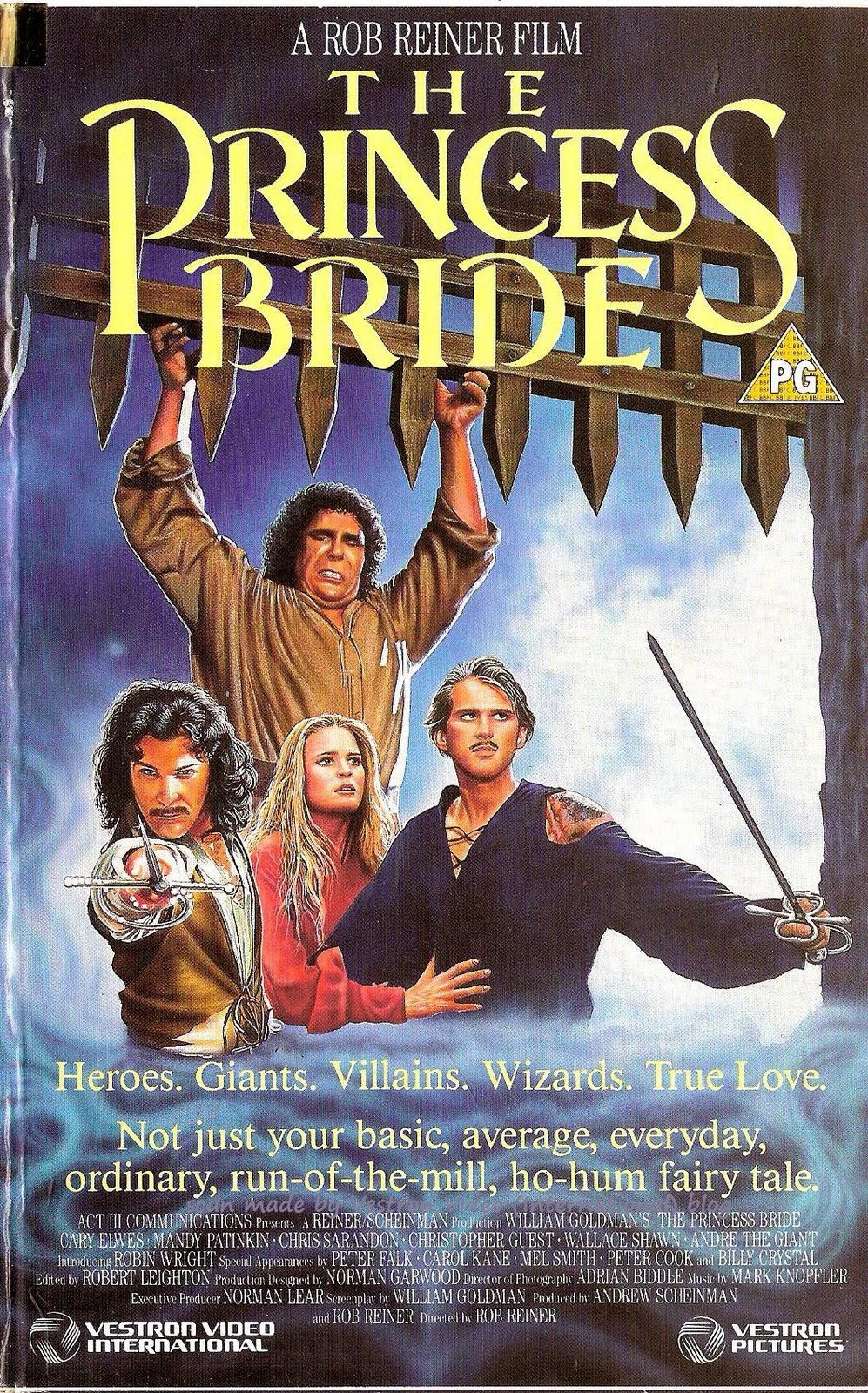
We can all agree, I hope, that the Princess Bride duel on the top of the cliffs of insanity is perhaps the best screen rapier duel in history. In terms of action, character, and tone, it's unmatched. But it ain't the slightest bit historical. References to historical fencing masters aside, there's not a breath of history in it.
The Duellists, by Ridley Scott, is probably the best, most accurate, historical duelling on the screen, with smallsword and sabre. It seems that sabre and smallsword duels are generally done better than earlier styles, probably due to the way all fight directors get taught sport fencing.
So, rather than suffer my way through endless terrible movies and tv shows in search of a decent longsword, rapier, sidesword, or anything else pre-1750 duel, I sent out an email to my mailing list a few weeks ago and asked them what they thought, and created an online form to collect their answers, which you are welcome to add to here:
https://forms.gle/hquTCZVW8ENjymJZA
The advantage of the form is it allows you to see everyone else's answers (once you've put your own in), so you might also pick up some useful tips. I've set the form to not collect email addresses etc., so you should be able to use it without being inducted into an evil cult.
The results have been interesting. There were quite a few I was expecting, such as Rob Roy, The Three Musketeers, The Princess Bride, Scaramouche, and The Seven Samurai. But there were also some I'd never heard of, such as Black Sails and Vatel; and some I've heard of but not seen, like The Witcher.
I promised I'd find a way to share the results, so I've double-checked for no identifying data, and created a csv file which you can download from here:
The best HISTORICAL swordfights on screen CSV
Now I do have to say, because I'm a historical pedant, that very few of the recommendations are remotely historically accurate (though I don't suppose that applies to the Star Wars recommendations!). So as a way to find historically accurate sword fights on screen, this has not been very successful. But it has certainly been a lot of fun, and may lead you to discover new shows to enjoy.
You may also enjoy my analysis of The Princess Bride duel here, or an analogy between historical martial arts and Mary Poppins (yes, really), here. And if this sort of thing is your jam, you should sign up to the mailing list with the snazzy form below.
Is Syrio Forel from Game of Thrones the worst (fictional) fencing master ever?
Training montages are common in swashbuckling movies and TV shows. You know the sort of thing, where the young student is trained by the old master. As you may imagine, these are usually my favourite bits. But they often seem to revolve around the “master” humiliating and defeating the student, which is hardly good training.
The Mask of Zorro has some interesting scenes of Antonio Banderas being trained by Anthony Hopkins. I am particularly taken with the doing push-ups over candles (though Antonio’s abdominal support needs work) while the master rests his feet on the students’ back, but the bullwhip? Definitely very dodgy indeed.
But at least, at the end, ANTONIO DISARMS ANTHONY! Hurrah!
Now onto my main point.
The Game of Thrones is a great series. With shows based on books, I almost invariably prefer the book, but in this case, I waded through the first volume, and when most of the best characters were killed at the end of it, I decided I couldn’t be bothered with the next one. Why spend all that time getting to know people if they are just going to get slaughtered? No such trouble with GoT on TV; it moves too fast for the investment of time in a character to feel like a waste when they are inevitably betrayed to their deaths.
But Syrio Forel. Oh dear. In the book (volume one, A Game of Thrones, p 225 in my mass-market paperback), Arya’s first lesson is described like so:
Hmm. Where to start. Skill development being retarded by physical exhaustion? or by constant failure? Ho hum. The TV show is pretty faithful to the book here, with the notable exception of Syrio’s hair (absent on the page, bouffant on screen).
You can see this scene here:
This seems to me to be perhaps the teaching style least likely to ever generate a good swordsman. Here’s why:
1) Arya’s actions never succeed. Not once do we see her actually succeed in doing anything more than parry. She is practising to fail; practising stuff that does not work.
2) Syrio’s actions almost always succeed. Whatever Arya does, he pulls off some new trick she hasn’t seen before, and hits her (or at least presents the point). Whatever she does, she loses. So the style she is learning clearly (in her subconscious mind at least) does not work!
To Syrio’s credit, he doesn’t brutalise his student (a very common occurrence in martial arts circles, where inexperienced, insecure, or just plain vicious instructors seem to think that the way to earn their students’ respect is to beat the crap out of them: my advice, leave immediately and don't come back!), and Arya certainly seems to love the training; we see her practising outside class time, and she often grins when he does some cool trick. But it should be him grinning when she does some cool trick!
So hark ye to the rule of Guy: an individual lesson should be geared such that if the student is doing what they are supposed to do, then it should succeed. If not, they get hit (gently). Develop the selective pressure such that to keep succeeding, they have to do it better and better. Improvement is natural, automatic, and fast.
When giving an individual lesson, I tend to get hit about five times more than I hit. Because I adjust the pressure accordingly; the student is always at the very edge of what they can do; pushing the envelope, making mistakes, but usually succeeding. (See here for more detail; and credit where it’s due; I learned this explicitly on the British Academy of Fencing coaching course I went on in 2010.)
There is one reason (in fiction; none in real life) for the master to beat up the student: when they first meet, the master may, for good story reasons, need to establish incontrovertibly that they have something to teach. The brash young hero needs taking down a peg or two, to get them into a more receptive frame of mind. Fair enough. But that ain’t the training, that’s the introduction. The lesson itself should, must, be all about the student’s development.
Game of Thrones fans interested in how longswords should be used, might enjoy both my Longsword curriculum (online with lots of free videos) and my latest book, The Medieval Longsword.
So, there you have it. Can you think of any worse fencing masters on the page, the stage, or the screen? And should I do a post on “Guy's favourite training montages”?