Hi, I'm Guy. Welcome!

I am a consulting swordsman, teacher, and writer.

I research and teach medieval and Renaissance Italian swordsmanship (I have a PhD in recreating historical martial arts), blog about it, write books about it, have developed a card game to teach it (which involved founding another company, and crowdfunding), and run Swordschool.

And as if that wasn't enough, you can even contact me here.

I look forward to hearing from you.

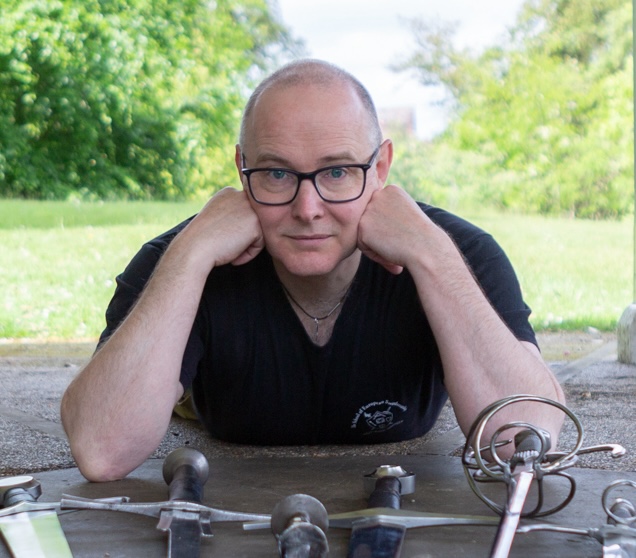
Guy Windsor with swords.

Latest Blog Posts

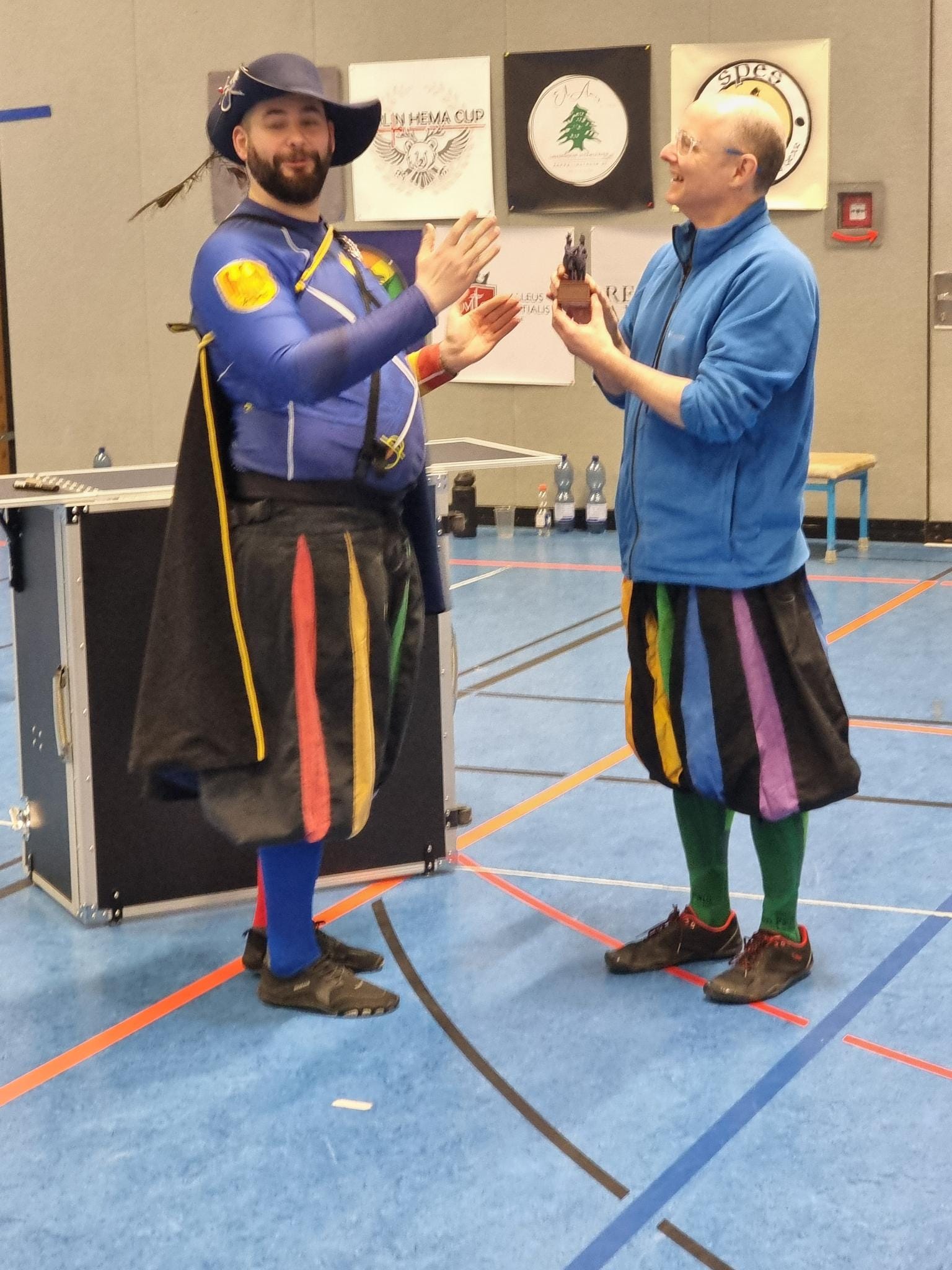
Stephan giving Guy Windsor a statuette prize for teaching a class in the worst time slot at the Torneo di Spada hema tournament
Receiving the prize for “because someone had to teach the slot”.

I'm not known as a tournament fencer these days. Indeed it's been well over 20 years since I last officially competed. But one of the great benefits of interviewing so many people on The Sword Guy is that they spark ideas in me that then get acted on. My conversation with Martin Hoeppner included a lengthy discussion of tournament rulesets, and cemented my pre-existing opinion that his club holds great events (I’ve taught at their Swords of the Renaissance four years in a row). A few weeks later I interviewed Maciej Talaga about an academic article he wrote on medieval physical culture, and we got talking about the benefits of tournaments for historical martial artists.

This got me really thinking… I have a decent amount of tournament experience from sport fencing in the 80s and early 90s, but the last time I entered a tournament was in (if I recall correctly) 2003. It was a rapier tournament, in Italy, and I won it. But I had been a professional instructor for two years by this point. If I win, so what? Being a competent fencer is part of my job. If I don’t, then what does that say about my right to teach?

Bear in mind this was a very, very, long time ago.

There are some major equipment issues with modern tournaments: most don’t allow steel gauntlets (I absolutely will not use any of the synthetic gauntlets currently on the market, for the simple reason that they prevent me from holding my sword correctly), and most probably wouldn’t allow my That Guy’s Products mask. In situations where cuts to the head with a heavy weapon are likely, anything built on a fencing mask foundation are simply inadequate.

I understand that creating equipment requirements for a tournament is a nightmare job for the organisers; it’s much easier if you can insist on established brands and models. But the restriction on steel gauntlets extends back to well before the time that companies were making synthetic gauntlets, and organisers were requiring things like lacrosse gloves because “steel gauntlets are dangerous”. Which in an activity that involves swinging steel bars at people’s heads seems at best misguided.

(I think I need to do a deep dive into sparring gear for longswords and other heavier swords… interested?)

I’d heard about the Torneo di Spada through attending Swords of the Renaissance, and checked with them that my mask and gauntlets were allowed. They are!* And they very kindly lent me some of the extra bits of kit (such as forearm guards) that I don’t have. They also asked me to teach a class on the Sunday afternoon, which made the whole thing even easier to approach.

I flew in to Berlin on Friday night, and on Saturday geared up and got stuck in. The first day was sidesword. This was perfect for me because I’m not a sidesword instructor. I haven’t taught a class in Bolognese fencing since maybe 2007, so I could go into it with no particular expectations. My goals were simple:

1. to break the seal on my tournament fencing,

2. evaluate my current level of training,

3. and, most importantly, to embody the spirit of the Art of Arms.

Bolognese Sidesword Tournament

How does one embody the spirit of the Bolognese Art of Arms? In the 16th century duels were very often public affairs. Your reputation is on the line, as well as your skin. The most important thing is to fence boldly.**

The ruleset was simple: hits to the head score 3 points, to the lower leg 2 (hence the need for shin guards), and anywhere else only 1. This is to reflect the opinion of Antonio Manciolino in his 1531 Opera Nova, in which the author writes that the head is the most noble target (a common opinion at the time), and that the lower leg should count higher because it’s so hard to hit without getting hit yourself.***

Every bout consisted of three scoring passes, so the maximum possible points in a bout was 9.

The twist was that the ranking is primarily based not on the points, but on how many passes you survive untouched. Winning 9-3, where you get 3 points in every pass and your opponent gets one, is useless; it’s better for your ranking to win 3-0.

A tournament-minded fencer will then be very cautious, and if they can’t stop the attack, at least go for a double.

To my mind though, to properly embody the spirit of the art, I needed to march in and hit them in the head, with style and control, but absolutely no dicking about at the edge of measure trying to not get hit. So that’s what I did.

The results? In my pool of 8, I had 7 bouts (21 passes), and scored 37 points, of which 33 were from hits to the head. But I had only 5 clean passes. That put me 21st out of 25 fencers. (Where the ratio of clean passes was the same, ranking was decided on points.)

I was delighted. My points per bout were the highest overall (37 out of 7, so 5.3). The next best was 38 out of 8 bouts, so 4.8. The next highest number of head hits was 7 to my 11. And several people complimented me on my fencing style.

Of course, if it was the points that counted, not the clean passes, the other fencers would have been motivated to go for head shots too, they would probably have scored a lot higher: the comparison isn’t really fair, but it is illustrative.

The Rapier Tournament

The second day was the rapier tournament. My goal was the same: to embody the spirit of the art. But the art was different. When it comes to rapier, I’m a Capoferro man, so the year is 1610, the duel is private, the top priority is going home in a whole skin. Fencing to first blood is fine: murder is an option not an obligation. So my fencing was totally different. Not just the style, but also the incentives.

The clean passes ranking was the same. Points were scored so that thrusts to the head or body were 3 points, cuts to the head 2, and cuts or thrusts anywhere else just one.

Fencers could choose rapier, or rapier and dagger, but they had to agree (so, both fencers had the same weapons). I always gave my opponent the choice, because I want their best game. In the end I think I used a dagger in three of my bouts.

In the qualifying pools I had 9 bouts (27 passes) and scored 19 clean passes, so a 70% success rate. I only scored 42 points, of which only 5 hits were to the head. This put me at the top of the rankings for all 30 fencers (the next best was 63%), but lots of fencers scored more points than me.

I conclude from this that the clean-passes ranking system rewards a private-duel mindset and approach.

Safety First

Unfortunately I wasn’t careful enough with one of my opponents. I knew he was wild, but after the halt was called he was chambered to cut me in the head. I stopped at the halt, and so didn’t parry his full-force horizontal cut to the right side of my head. As I was not expecting heavy head cuts in a rapier pool, I was wearing my regular fencing mask (it’s a bit better for face thrusts), with the usual HEMA overlay. This is totally inadequate to deal with that kind of blow, and he rung my bell. He also got a red card.

I sat down for a bit, and thought about my options. I had no obvious signs of concussion: vision and balance were fine. My last three opponents were all relative beginners, and not prone to hard hitting, and I didn’t want to drop out, so I fenced them very carefully (I got three clean passes in all three bouts).

There was about half an hour before the pools all finished up and the rankings to go on to the next round were announced. At the end of that time, over an hour after the blow, my head still hurt.  When it comes to brain injury a second hit in the same place is orders of magnitude more dangerous than the first one. And the “champions pool” would have no easy fights in which I could be reasonably certain to prevent my opponent from catching me in the same place. If I had a student in that situation I would not let them continue, so I withdrew.

The organisers and my fellow fencers were all entirely understanding and supportive of my decision. And I should say here explicitly that there was no malice or bad sportsmanship involved in the situation. I should have recovered under cover, not just stopped dead.

I should also say that none of the three medal winners were in my pool, so it could be that I would have ranked less well if I’d had stronger opponents. I don’t want you to think that coming first in the qualifying pool means terribly much. Had I continued I probably had a 50% shot at a medal.

Fitness

At the end of my first bout on the first day I was breathing quite hard. This was odd, because the bout wasn’t that challenging or athletic. It could only be tournament pressure. This was excellent! It meant I had a chance to practice controlling my level of arousal. I cycled in some breathing exercises, and got my breathing and heart rate back down to reasonable levels, and had no fitness difficulties at all for the rest of the weekend.

I could feel my thighs and shoulders a little bit on Sunday morning, but nothing significant.

More critically, my recently-recovered knees were fine, and so were my back and neck. So it seems that my physical conditioning is working really well. Hurrah!

The only point of stiffness or soreness on the Monday morning after the whole weekend was over, was the front of my ankles. A completely weird place to feel a bit of fencing, so I’ll try to figure out what caused that.

I’m being extremely cautious about my head. No alcohol (which I’m off at the moment anyway), and I won’t engage in anything where I’m likely to be hit in the head for a good long while. A minor head trauma is like priming your immune system for anaphylaxis. You have to avoid the stimulus if you don’t want a severe response.

The Tournament Fencer

Quite a few of the fencers there were clearly in it for the tournament. For them, winning the tournament itself was the goal. Medals matter. This generates a fencing style that is like a cross between sports epee and a bit of kendo, with lots of jigging about at the edge of measure and a very fast tag with the sword.

You can tell the competitors because they ask questions about the rules (what exactly counts as stepping out of the ring? Does my foot have to touch the ground? The whole foot? What if it’s just my heel?). They also use their ‘video challenge’ right. In the finals, video challenges were allowed, one per fencer per bout. If the challenge was successful you can challenge again. This means that if you disagree with the judges, you can, in effect, argue with them.

To a tournament fencer, it really does matter who gets the points. It’s what they are there for. To lose a medal because the judge made a mistake would be intolerable.

I would die in a pit of fire before I ever issued a video challenge. If I failed to hit my opponent with such clarity and in such obvious control of their weapon that the blind, drunk, biased-against-me judge who has been bribed by the opposition,** still has to give it to me, then I don’t deserve the point. “Bad” judging (as in judging you disagree with) is part of the tournament challenge. The greater the challenge, the greater the learning opportunity.

It’s really useful to have people like that to fence against, because they are usually very good at hitting you, and in ways you may not expect because they look different to the canonical style. The hit is always right. If you fail to parry, that’s on you. Also, seeing how incentives affect behaviour allows you to learn to predict some of that behaviour. Another useful learning opportunity.

It’s illustrative of the difference that, while I think I won my first bout on Saturday 7-4, and I can work out some of my clean-pass scores, I don’t actually know what my scoring was in any of the bouts. I don’t think I looked at the scoreboard more than half a dozen times in the whole weekend. Because the points aren’t relevant to my aims.

This is not virtue. There is nothing wrong with being a tournament fencer, who needs to track their score because it matters. I’m just playing a different game.

Final thoughts

Firstly, thanks to Stephan, Anna, Martin, and the rest of the Schildwache Potsdam team. Especially those noble souls who gave up their weekend to judged and score. It’s a huge amount of work putting on a tournament like this, and you all made many young fencers very happy, and one old instructor too.

Secondly, thanks to all my opponents over the weekend. I hope you enjoyed fencing me as much as I enjoyed fencing you. I do wish I’d kept a record of everyone I fenced, but I failed to. If you recall our bouts, feel free to remind me either in the comments or by email.

Thanks also to Malleus Martialis for sending me a delicious sidesword at very short notice. I only signed up for the tournament in mid-December, then realised my old sidesword was not fit for modern competition use. So I contacted Eleonora at Malleus, and a shiny new sword was waiting for me when I got there.

One interesting quirk of the way the tournament was constructed was that fencers in each pool had to find their own opponents, and keep doing so until you’d fenced everyone in your pool. This means that your first interaction with your opponents is face to face, unmasked, and arranging a match together. I didn’t notice it at the time, but chatting with Stephan afterwards it was clear that this contributed something to the feeling of the event. We weren’t fencing against anonymous numbers. We were fencing our colleagues, peers, and friends.

Overall, I’m delighted by the results. I went there to play my game: to use the tournament environment to measure and develop my historical fencing skills against motivated and resistant opponents. Most particularly, to not get sucked in to the competitive fencing mindset, where scoring touches according to the rules is the only consideration.

There was one pass in the whole weekend where I decided to play tournament. In one of my rapier bouts it seemed that the only thing the judges could see was incidental arm touches. Bending my sword on my opponent’s chest was literally invisible. So in the last pass I flicked my point under my opponent’s guard from the edge of measure. Sure enough, point to me. Ugh.

So I stopped that and went back to embodying the Art of Arms as best I know how.

Notes

*The organisers have asked me to mention that “we allow steel gloves only under circumstances where we, as organisers, can be absolutely sure that they are of proper quality, well maintained, free of burrs and sharp edges, and without loose rivets.”

** For example,  Leonard Eckstein Opdycke’s translation of Castiglione’s Book of the Courtier, Book 1, paragraph 21: “ “Moreover I deem it very important to know how to wrestle, for it is a great help in the use of all kinds of weapons on foot. Then, both for his own sake and for that of his friends, he must understand the quarrels and differences that may arise, and must be quick to seize an advantage, always showing courage and prudence in all things.

Nor should he be too ready to fight except when honour demands it; for besides the great danger that the uncertainty of fate entails, he who rushes into such affairs recklessly and without urgent cause, merits the severest censure even though he be successful.

But when he finds himself so far engaged that he cannot withdraw without reproach, he ought to be most deliberate, both in the preliminaries to the duel and in the duel itself, and always show readiness and daring. Nor must he act like some, who fritter the affair away in disputes and controversies, and who, having the choice of weapons, select those that neither cut nor pierce, and arm themselves as if they were expecting a cannonade; and thinking it enough not to be defeated, stand ever on the defensive and retreat,— showing therein their utter cowardice. And thus they make themselves a laughing-stock for boys, like those two men of Ancona who fought at Perugia not long since, and made everyone laugh who saw them.”

“And who were they?” asked my lord Gaspar Pallavicino.

“Two cousins,” replied messer Cesare.

Then the Count said:

“In their fighting they were as like as two brothers;”

*** Specifically (in Jherek Swanger’s translation):

[40] Of two playing together, he who strikes in response is more praiseworthy than the one who strikes the first blow, because he reveals himself sooner to become enraged than to lose vigour after the received hit.

[41] It is not licit after the received blow to make more than one response stepping forward with a crossing step; the reason being that one must do well with all of one’s wit, since with that one can recover honour.

[42] The blow to the head, considering the excellence of that member, counts for three; and the blow to the foot is taken for two, having regard for the difficulty of making it so low.

[43] A valorous player is he who redoubles his blows.

****Just to be clear, the judges were of varying levels of experience and skill, but were all wearing any necessary eyewear, sober, honest, and unbiased to the point of spending endless amounts of time discussing what exactly happened because they really, really, wanted to be fair. And the only way to get skilled, experienced, judges is to give less-skilled, less-experienced judges the opportunity to practice. I have no complaints, and much respect for their time and effort.
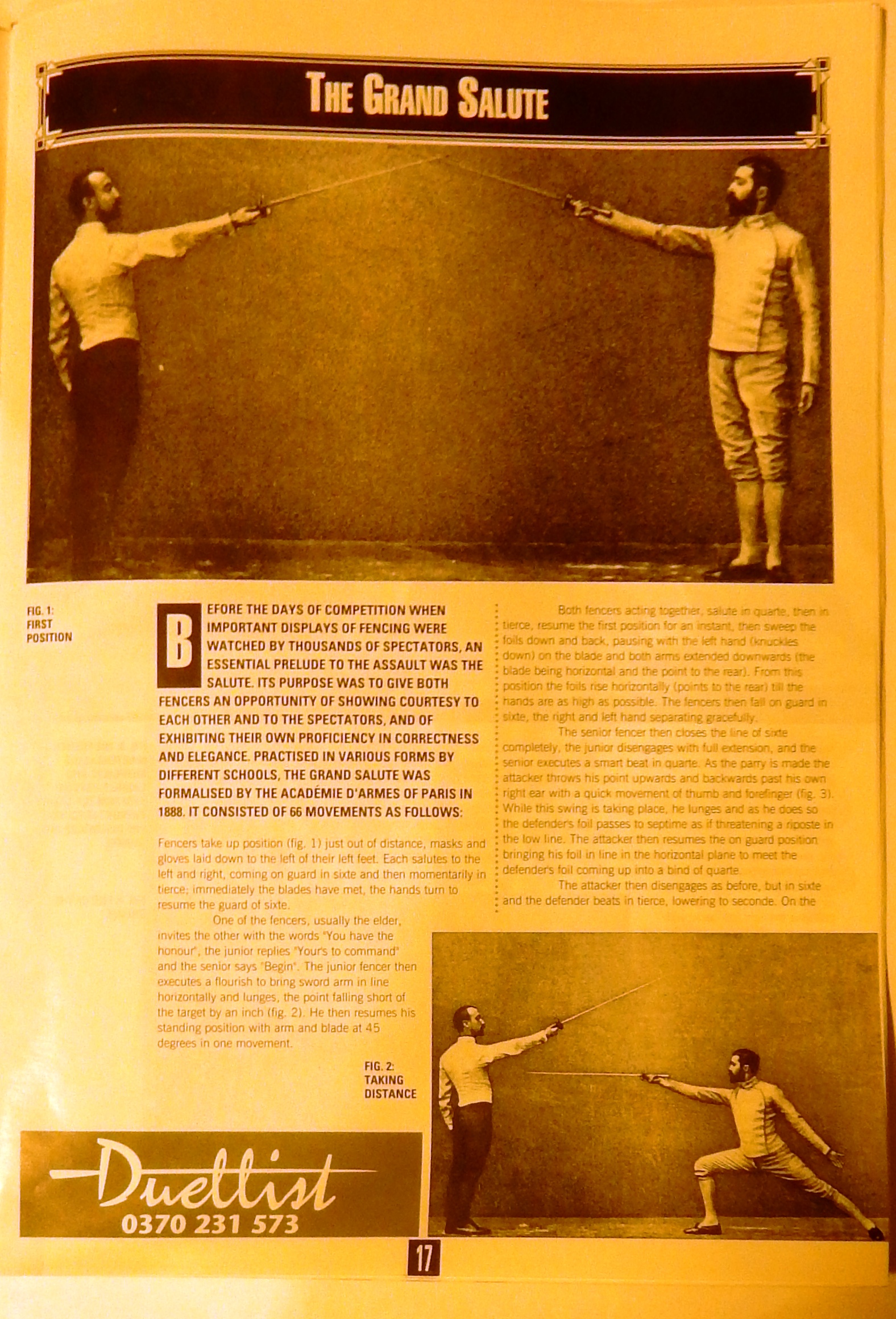
My friend and colleague Malcolm Fare, proprietor of the National Fencing Museum, would like to know if anyone reading this is familiar with the Grand Salute, as  formalised by the Académie d'Armes de Paris in 1888.

As the editor of The Sword magazine, he published an account of the Grand Salute in 1995. You can see the article here:

The Grand Salute article, page 1
The grand salute artic
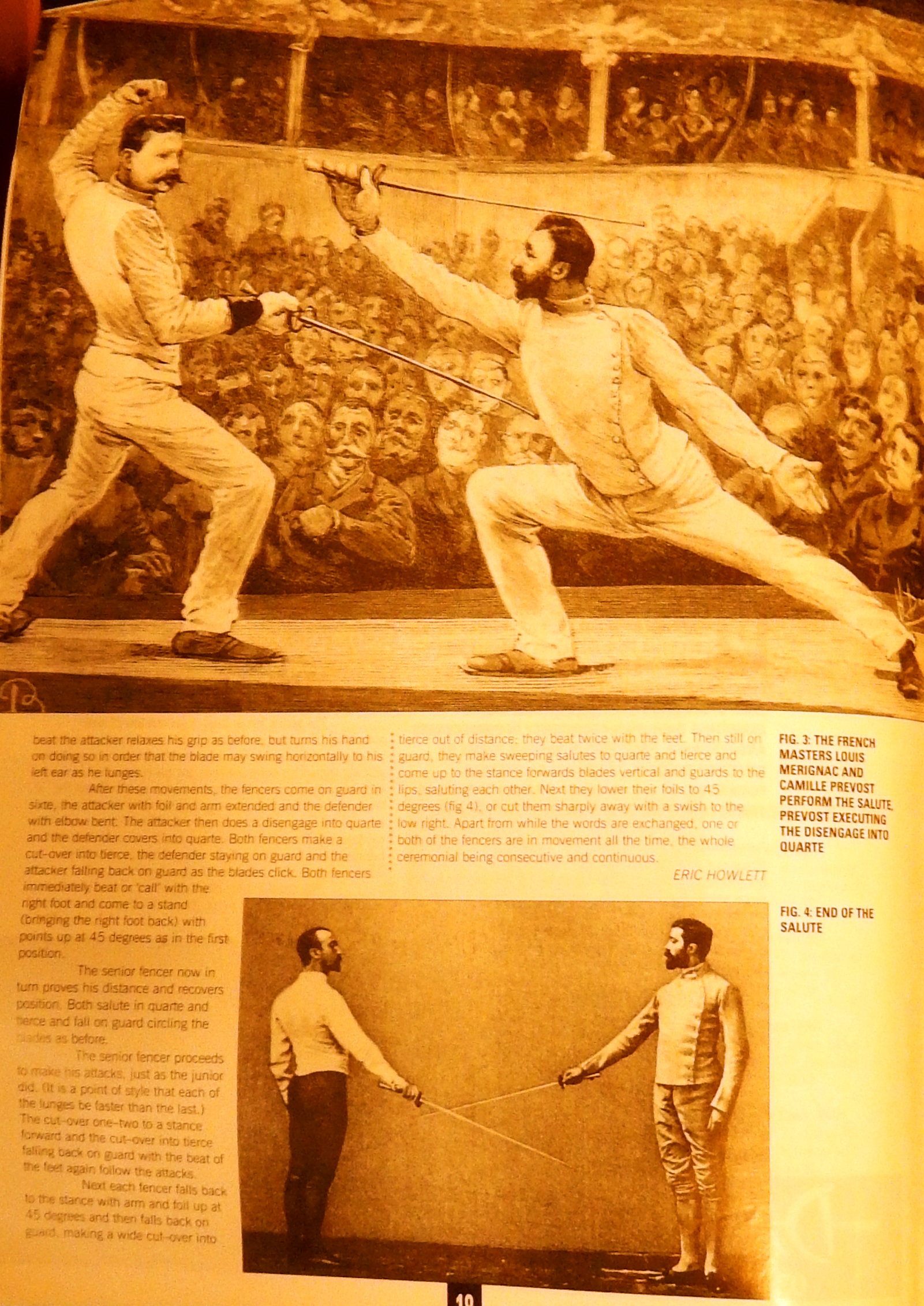
The Grand Salute article, page 2


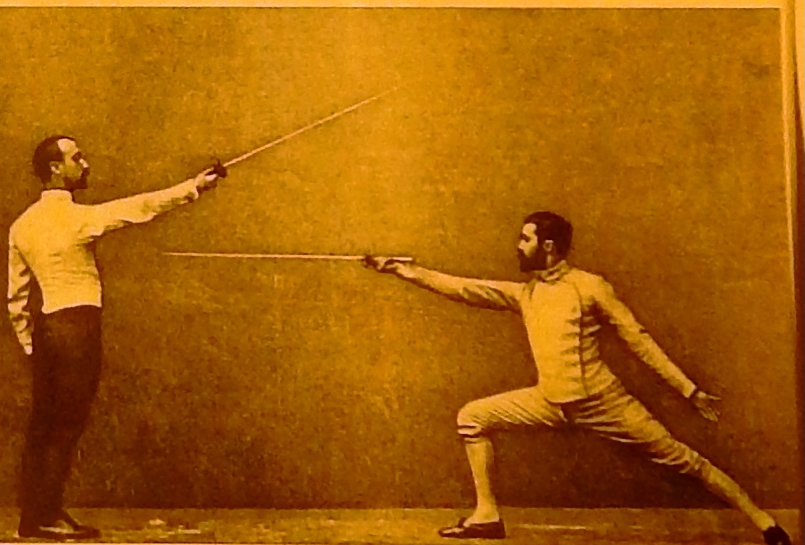
The article was prepared by the fencing coach Eric Howlett (1921-2015), who translated the text from L'Escrime et le Duel by Previost & Jolivet, 1891, with captioned photos by Nadar of the various moves.

Here's the text in a more accessible format (this may not be a perfect transcription):

The Grand Salute

Before the days of competition, when important displays of fencing were watched by thousands of spectators, an essential prelude to the assault was the salute. Its purpose was to give both fencers an opportunity of showing courtesy to each other and to the spectators, and of exhibiting their own proficiency in correctness and elegance. Practised in various forms by different schools, the grand salute was formalised by the Académie d’Armes of Paris in 1888. It consisted of 66 movements as follows:

Fencers take up position (fig. 1) just out of distance, masks and gloves laid down to the left of their left feet. Each salutes to the left and right, coming on guard in sixte and then momentarily in tierce; immediately the blades have met, the hands turn to resume the guard of sixte.

One of the fencers, usually the elder, invites the other with the words “You have the honour”; the junior replies “Yours to command” and the senior says “Begin”. The junior fencer then executes a flourish to bring the sword arm in line horizontally and lunges, the point falling short of the target by an inch (fig. 2). He then resumes his standing position with arm and blade at 45 degrees in one movement.

Both fencers, acting together, salute in quarte, then in tierce, resume the first position for an instant, then sweep the foils down and back, pausing with the left hand (knuckles down) on the blade and both arms extended downwards (the blade being horizontal and the point to the rear). From this position the foils rise horizontally (points to the rear) till the hands are as high as possible. The fencers then fall on guard in sixte, the right and left hand separating gracefully; the senior fencer then closes the line of sixte, the junior disengages with full extension, and the senior executes a smart beat in quarte. As the parry is made, the attacker throws his point upwards and backwards past his own right ear with a quick movement of thumb and forefinger (fig. 3). While this swing is taking place, he lunges, and as he does so the defender’s foil passes to septime as if threatening a riposte in the low line. The attacker then resumes the on guard position, bringing his foil in line in the horizontal plane to meet the defender’s foil coming up into a bind of quarte.

The attacker then disengages as before, but in sixte, and the defender beats in tierce, lowering to seconde. On the beat the attacker relaxes his grip as before, but turns his hand on doing so in order that the blade may swing horizontally to his left ear as he lunges.

After these movements, the fencers come on guard in sixte, the attacker with foil and arm extended and the defender with elbow bent. The attacker then does a disengage into quarte and the defender covers into quarte. Both fencers make a cut-over into tierce, the defender staying on guard and the attacker falling back on guard as the blades click. Both fencers immediately beat or call with the right foot and come to a stand (bringing the right foot back) with points up at 45 degrees as in the first position.

The senior fencer now in turn proves his distance and recovers position. Both salute in quarte and tierce and fall on guard, circling the blades as before.

The senior fencer proceeds to make his attacks, just as the junior did. It is a point of style that each of the lunges be faster than the last. The cut-over one-two to a stance forward and the cut-over into tierce, falling back on guard with the beat of the feet, again follow the attacks.

Next each fencer falls back to the stance with arm and foil up at 45 degrees and then falls back on guard, making a wide cut-over into tierce out of distance; they beat twice with the feet. Then, still on guard, they make sweeping salutes to quarte and tierce and come up to the stance forwards, blades vertical and guards to the lips, saluting each other. Next they lower their foils to 45 degrees (fig. 4), or cut them sharply away with a swish to the low right. Apart from while the words are exchanged, one or both of the fencers are in movement all the time, the whole ceremonial being consecutive and continuous.

Call for videos!

I'm aware of this apparently authentic but incomplete version of the salute here:

Does anyone here practice the Grand Salute, and if so, could you video it for Malcolm? If you do, let me know either in the comments here, or by email through my contacts page above.

Thank you!

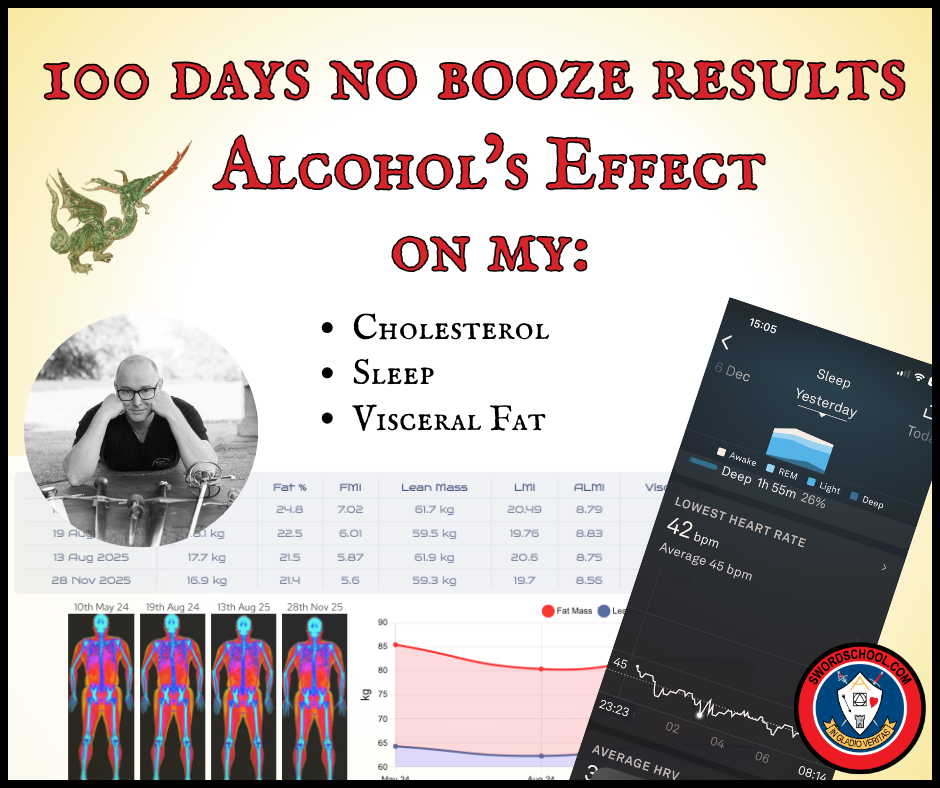
100 days no booze banner image with Guy Windsor, dexa results, oura ring results

I stopped drinking alcohol on August 19th, aiming for 100 days. In the end, I reached 103 days without booze, and without much effort. This post unpacks my 100 days no booze results, including cholesterol, visceral fat, sleep, heart rate, and the strange mysteries of my DEXA scans.

If you want the background and the halfway-point update, you can read that here — but let’s jump into the results.

Weight and Waist: The Simple Home Measurements

So what happened?The only measurements I can reasonably make at home are overall weight and waist circumference. Those have both improved.

  • Weight: 81.2kg 78.7kg
  • Waist: 91cm 88cm

Not bad results, but not stellar. I did once lose 10kg in three weeks

Two noticeable effects:

•Reflux definitely improved

•Sleep did not noticeably improve

But the most important finding wasn’t from any measurement device:

My wife and daughters all agreed I was much less irritable when not drinking.

That’s definitive.

The two main metrics I was trying to improve were cholesterol levels, and visceral fat. I was hoping for improved sleep and thus more creative juice too.

Cholesterol and Triglycerides

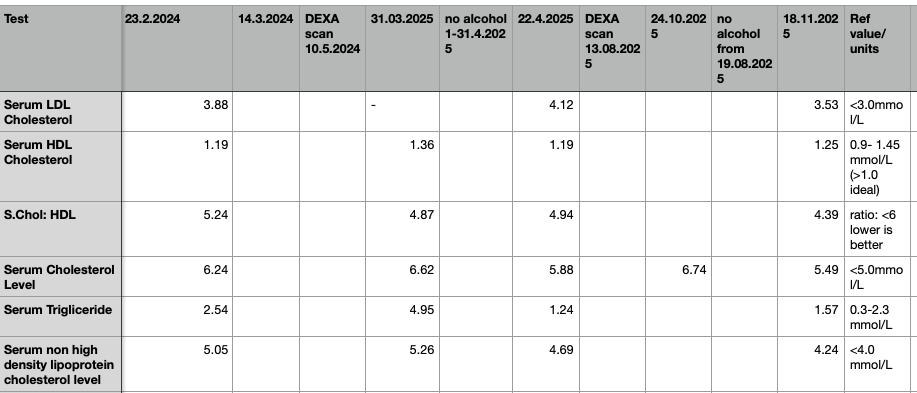
Let’s start with cholesterol. Here are the results over the last year:

spreadsheet with my cholesterol test results as affected by booze intake

Back on 31 March, my triglycerides were so high the lab couldn’t even calculate LDL. After just three weeks without alcohol, everything had improved dramatically by 22 April.

The 100 Days No Booze Results

After the full 100 days:

•LDL: down from 4.12 3.53

•Triglycerides: up slightly from 1.24 1.57, but still well within reference range

These numbers fluctuate, and any single blood test is just a snapshot — like a photo of a busy street rather than a full documentary. But overall:

The trend is clear: not drinking alcohol helps my cholesterol and triglycerides.

These things are not an exact science: there are too many variables affecting cholesterol levels on any given day. Any blood test is a snapshot of a moment in time, like a photograph of a busy street. But the trend seems positive. From a cholesterol and triglycerides perspective, it’s clear that cutting out alcohol helps me a lot.

A Coffee Cholesterol Surprise

Two weeks before the final blood test, I learned that diterpenes in unfiltered coffee can raise cholesterol. Since then I’ve switched to paper-filtered coffee. This may have helped too.

Visceral Fat: The Most Interesting (and Confusing) Results

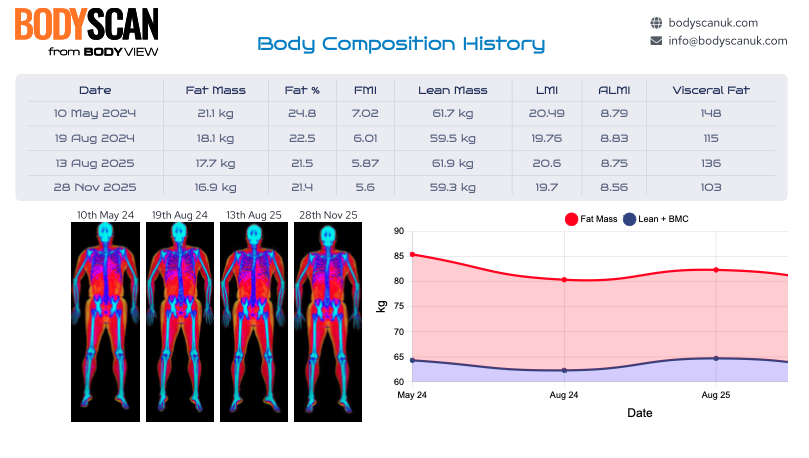
page from my DEXA scan results

Now the visceral fat. It was baffling to me that at my previous DEXA scan in August, my overall body fat was down quite a bit, but my visceral fat had jumped back up from 115 to 136. This latest scan, on November 28th, was even weirder. According to the weighing scales at the DEXA clinic, I’d lost a total of 1.8kg exactly.

My visceral fat is down to 103 cm2. (Visceral fat is measure in cm2 because it’s a calculation of the area of the cross-section of your torso at the navel. So if you cut me in half with a very sharp sword at my navel and measured the total area of fat, it would be 103cm2 out of a total of about 730)

Here's the pdf of the entire scan results: Guy_Windsor_2025-11-28-report

This is excellent, and what I was hoping. But here’s the thing. A bottle of wine is about 700 calories. I was averaging a bottle a day. So over 100 days, my overall calorific intake was down by about 70,000 calories (not counting the extra food I would have also eaten, because drinking with food tends to increase how much you eat). Fat stores about 9000 calories per kilo, so that’s about 7.8kg of fat.

But I’d lost a total of 785g. What the actual? That’s maybe 10% of what one might reasonably expect.

The rest of my weight loss came from “lean tissue”, mostly in the torso. 1.929kg from my trunk to be exact. That’s obviously not muscle (or at least mostly not muscle). There simply isn’t that much muscle to lose- and I’m stronger now than I was in August, including in my so-called “core”. So that’s either fluid, or organ mass, with perhaps some of it being gut contents (though my bowels were fine both that day and for the previous scan).

I also don’t understand how I can be 1.8kg lighter, having lost 2.631kg of lean mass and 785g of fat. That’s a total of 3.416kg… so where’s the extra 1.616kg? I certainly haven’t added that much to my bones! And I wasn’t bloated during the previous scan.

This was baffling enough that I contacted the company, and after a bit of email back and forth got on a call with one of their technicians. He pointed out that in my previous scans the DEXA total mass measurement agreed quite closely with the impedance scale measurement, except for my August 2025 scan, where it disagrees by just over 2kg. The simplest explanation is that the technician on the day recorded my weight wrong: he put 80.6kg in when it should have been closer to 82 (the DEXA recorded it at 82.298).

It’s normal for the DEXA scan to calculate total body mass about 2-400 grammes higher than the scale weight. But not 1.7kg high. And that 1.7kg is very close to the 1.6kg discrepancy in these figures. So if we correct that weight measurement, the numbers basically add up.

Here’s another mystery. According to the scan, I’ve gained 98g of lean mass (probably muscle) in my right leg… but lost 718g from my left leg! Without any noticeable change in relative strength (and yes, I am right handed and footed, but I do all my training on both sides, and in August, they were basically equal).

So, getting back to the actual point of the scan: it does seem that cutting alcohol cuts my visceral fat, but does nothing at all for my other fat. And it’s somehow fucked my left leg, even though it feels fine.

That was Friday, day 102 of my 100 days. So I had a small glass of wine that evening, and a few more on Saturday (my wife’s birthday), and a lot more on Sunday (my birthday). My reflux did not approve, but it was worth it.

Alcohol vs. Heart Rate: Oura Ring Data

Leaping down off the wagon like that gave me an opportunity to double check alcohol’s effect on sleep, so just for fun I put on my Oura ring and measured my heart rate. If you’re familiar with my Oura woes, I don’t take anything it measures seriously except heart rate, temperature, and HRV. It certainly can’t tell the difference between me lying in bed trying to sleep and me actually sleeping. But I do think it measures heart rate pretty well.

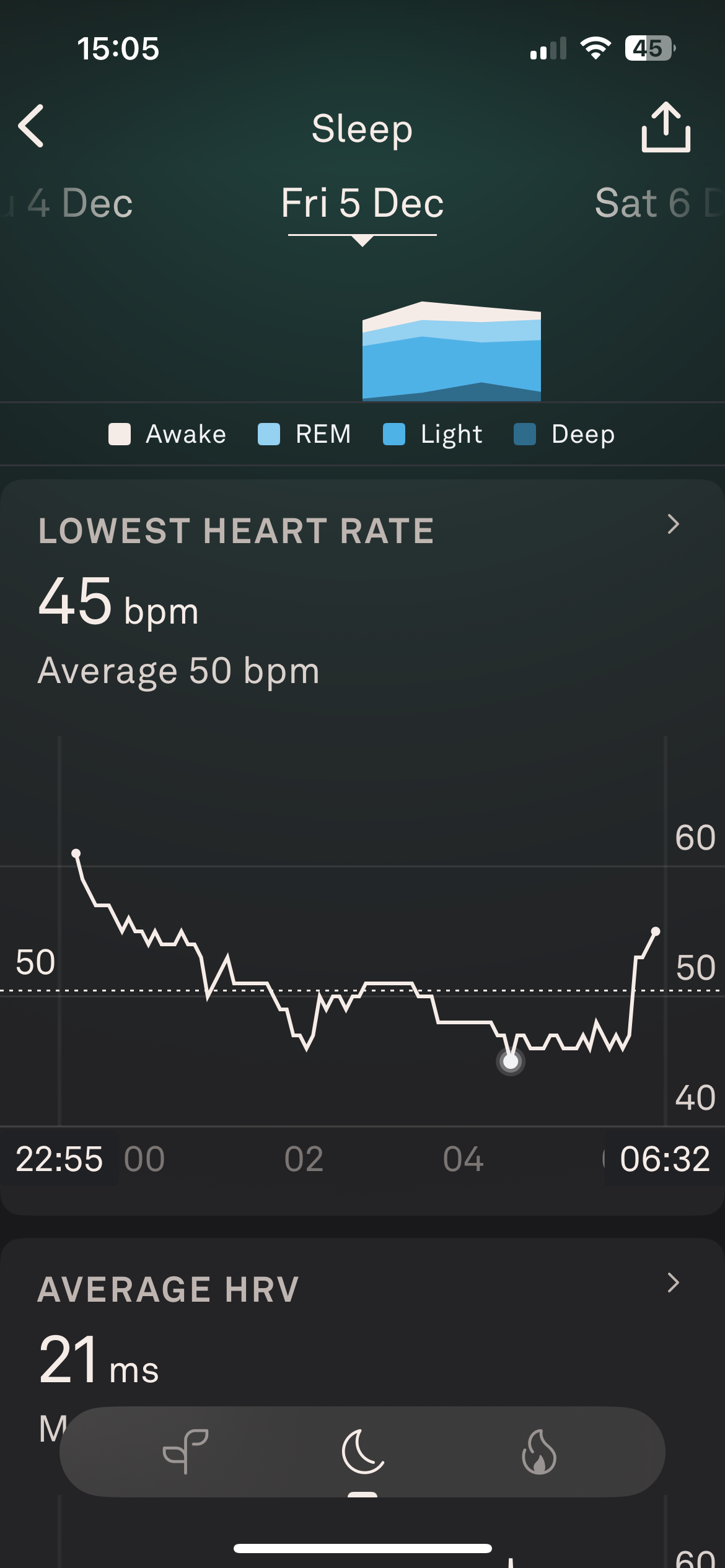
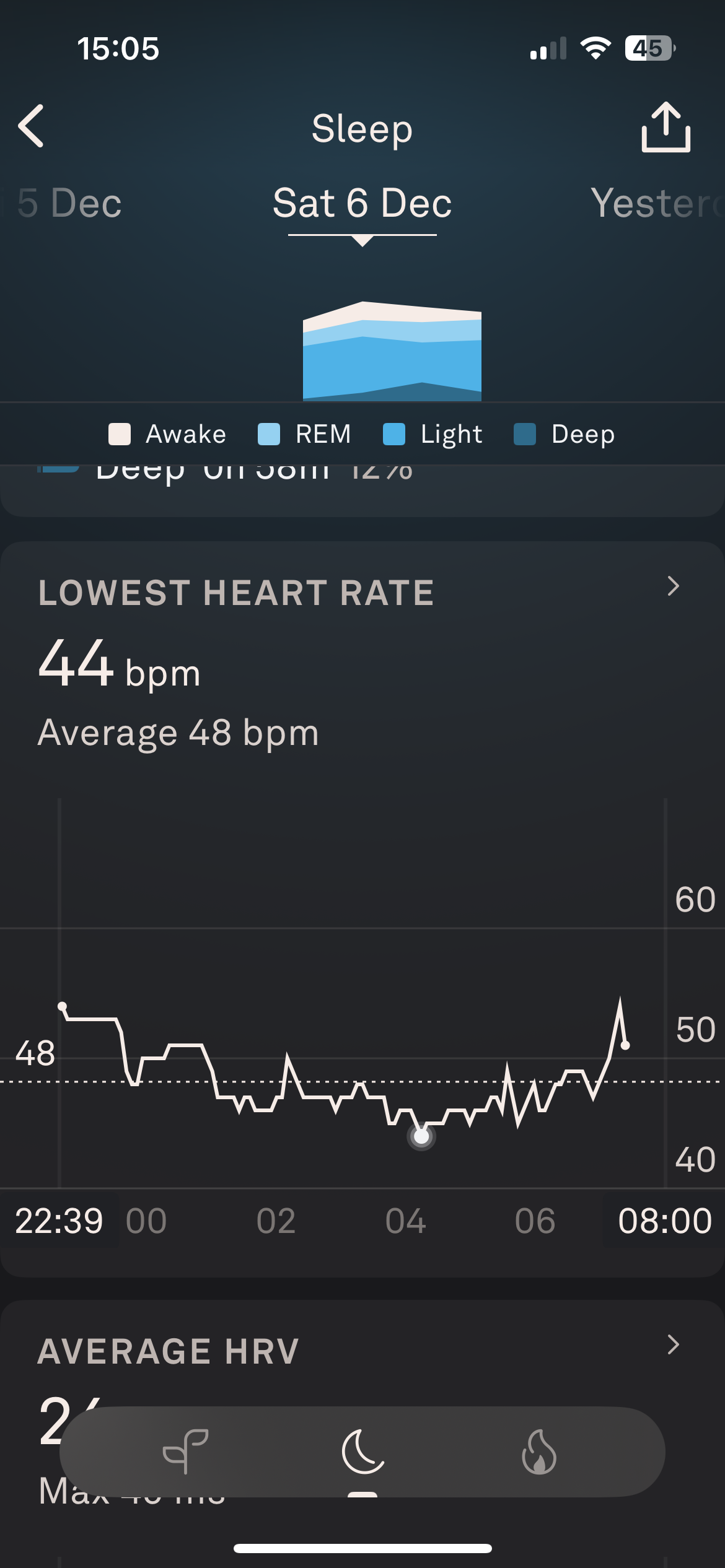
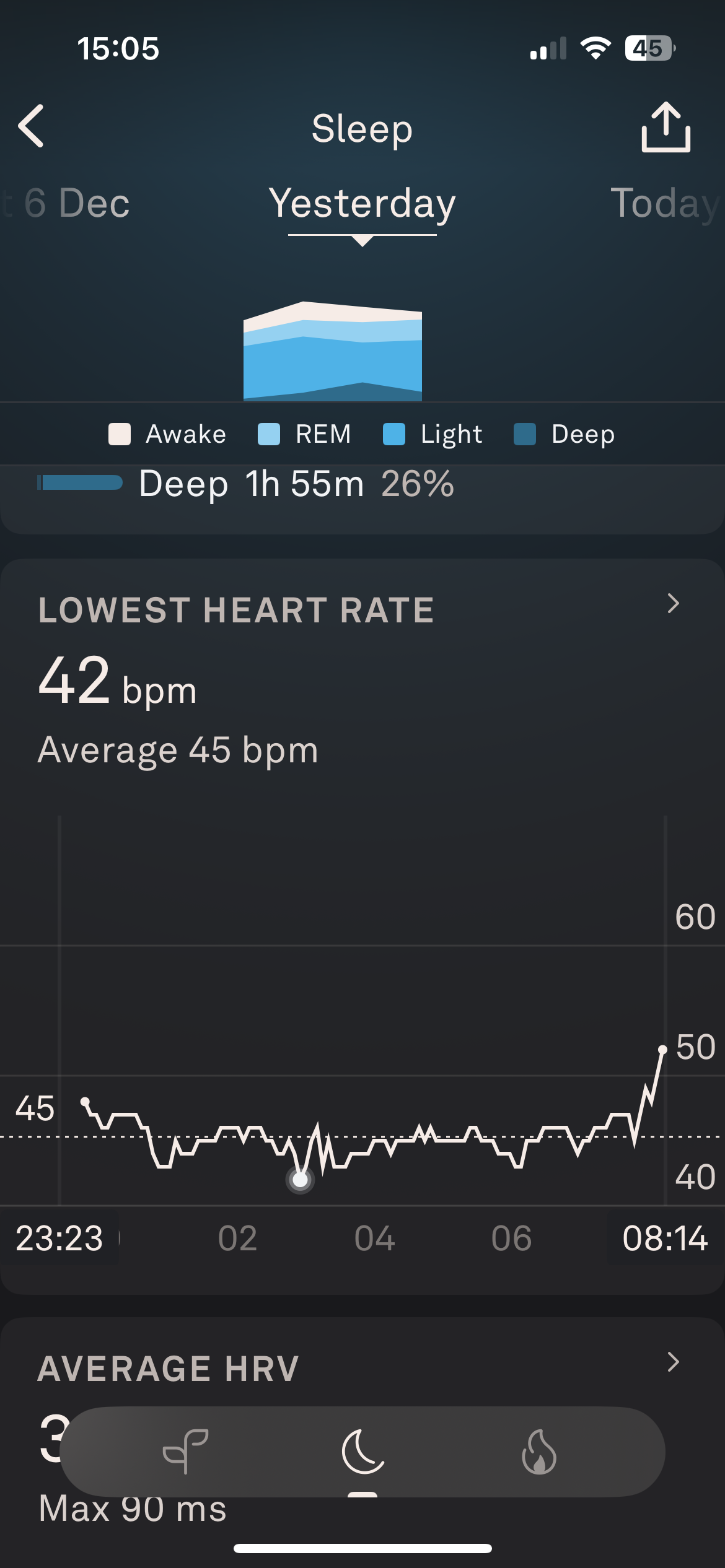
Here’s what the graphs look like. In each case I went to bed sober, and stopped drinking by 7pm, four hours before lights out.

Friday:
Friday night with a little booze: hr lowest 45 average 50

Saturday:Effect on HR with some alcohol on the Saturday: hr lowest 44, average 48.

Sunday:

Sunday no alcohol, so HR average 45, lowest 42.

So whether I actually feel better or not, it’s really obvious that my heart prefers me to not drink at all. I mean, average HR 45, lowest 42, that’s pretty decent. Generally speaking, any night when I haven’t drunk any alcohol, it’ll average something below 50, and get down to 45 or below.

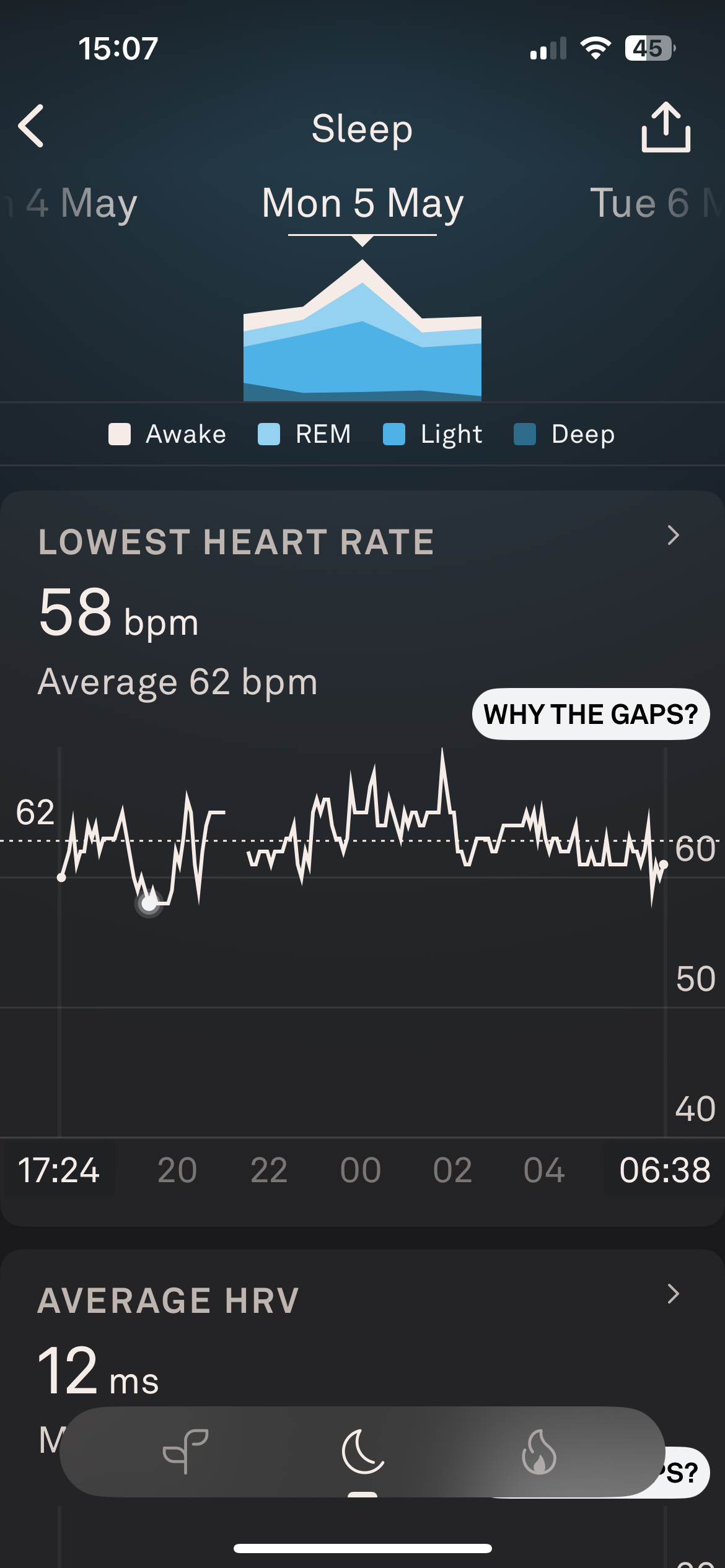
Just for fun: here’s what it looked like after I got accidentally shitfaced at my friend’s party. Last booze in about 4pm, I think.

party time: average HR 62!


What 100 Days Without Alcohol Really Changed

Putting aside the data inconsistencies, the genuine results are:

Positive effects

  • Major improvement in visceral fat
  • Lower LDL cholesterol
  • Overall waist reduction
  • Less irritability (confirmed by independent household authorities)
  • Significantly lower resting heart rate on sober nights

Little or no effect

  • Sleep quality (subjective)
  • Subcutaneous fat

Negative effects:

  • None.

So what am I going to actually do now?

I’d like to get my body fat percentage below 18. Here’s how I’ll approximate that:

1. Waist measurement down from 88 to 86cm.

2. Weight down from ~79kg to ~76kg.

Approach:

1. Restrict booze. Generally speaking, no drinking unless it’s a special occasion. Tuesday is not a special occasion.

2. Go slow-carb. It worked very well for me before, let’s try it again. Being careful to maintain protein intake, and continue with weight training, to preserve muscle mass.

3. Cycle on and off, cutting weight (which gets rid of fat and a bit of muscle), and bulking up (which adds muscle and a bit of fat).

4. Fast occasionally. I normally have about 15 hours between last calorie in at night and first in the morning anyway (just because it’s more comfortable for me). Increasing the fasting time to 18 hours is not hard, so I’ll think about doing that more often, with an occasional 24 hour fast, or even longer. I train too much to want to fast too often- I’m concerned about losing muscle mass.

4. Track weight, waist, and strength. If my waist is down and my strength is up, I’ll call that a success, whatever the scales or DEXA says.

December is not the month for this, so I’ll play around with various things as convenient, and get consistent and serious about it on January 2nd. Another 100 days no booze, with a strict slow-carb diet (no starch, no sugar, lots of veg and protein), will take us to April 12th. I will probably make exceptions to the no-booze thing, but only for very special occasions. There is a world of difference between two glasses of wine in a fancy restaurant every couple of months, and two glasses of wine before dinner every evening.

Final Thoughts on 100 Days No Booze Results

The headline takeaway is simple: Alcohol has a strong negative effect on my visceral fat, cholesterol, irritability, and sleeping heart rate.

It doesn’t magically melt fat off me, but it clearly improves a bunch of meaningful health indicators.

The basic idea behind all of my training and health related activities is this:

Find out what works for you, then do that.

Both of those components are hard. Healthcare professionals can tell you what the current-ish state of the science suggests should work for most people most of the time, but they aren't much good at targeting what works for you specifically. The only way to know what works for you is to try it, and track the results.

Then, having discovered that doughnuts make you fat, or alcohol is bad for you, or whatever it is, you have to figure out how to incorporate that insight into your daily life. That can be simple and easy, or it can be really hard, especially when it involves going against mainstream cultural expectations. Even if the intervention is simple, it may not be easy. I'm lucky in that this one was both simple and quite easy, but many others I've tried are a lot harder.

My book The Principles and Practices of Solo Training covers this approach in depth and detail. If you've enjoyed these alcohol posts, you'll probably enjoy that book. And we have a sale on until the end of the year: use the code GUYSBIRTHDAY25 for 25% off any digital product, and BIRTHDAYPRINT10 for 10% off any print product, at swordschool.shop.

I share this kind of thing on my newsletter quite often, so sign up below to stay informed.

guy's birthday sale banner with discount codes guysbirthday25 and birthdayprint10

I’ll be turning 52 on Sunday, and we’re celebrating in the usual way with a 25% discount on all digital products, with the code GUYSBIRTHDAY25. This works for all products (courses, subscriptions etc.) at courses.swordschool.com, and also for all digital products (ebooks, audiobooks, print-at-home decks etc.) at swordschool.shop

Digital products are great because they have negligible fixed costs- it doesn’t cost me money every time someone buys one. Print does, so I have to be careful about giving out too chunky discounts on print books. But: You can also get 10% off any print book (including the brand-new dagger book) with the code birthdayprint10 at swordschool.shop.

Also, Christmas is coming up, which is a lovely time for many, and a miserable time for some. And a total non-event for billions of people around the world. It falls on a Thursday this year, which is very convenient. I’ll be running my usual morning trainalongs on Wednesday 24th and Friday 26th, which you can find in the “support sword people” area of the swordpeople.com. That is behind a very small paywall. If you’d like to join us but don’t want to create a swordpeople account, or are short of cash, just email me and I’ll send you the zoom link (no need to justify your request in the email, just ask for the link).

The sessions are at 8.30am UK time. The session opens at 8.25, and we run for an hour, with a bit of time at the end for chat etc. It’s not a formal class, just an opportunity to do some good-for-you physical training. Some folk follow along with what I’m doing, some just do their own thing but in company, and others mix and match. Join us if you dare!

Here's a sample trainalong session. I've been doing these since lockdown, but am very slack about recording them, so this dates back a loooong time:

Such fun!
Newsletter subscribers have had access to these discounts for a week already, so if you want to stay in the loop and aren't already signed up, join us with the form below.

And stay tuned for a 100 days no booze update, expected end of next week.

Browse the full library of Dr. Guy Windsor’s work: books in physical, digital and audio formats, workbooks, and video courses.

Guy frequently keeps his blog updated with thoughts, challenges, interviews and more!

Bio

Find out why teaching swordsmanship and running the Swordschool means so much to Guy.

live classes

If you’d like to book into a live training or discussion session and hear from Guy directly, check out his schedule here.